A featured work
The moment everyday supermarket shelves became high art.
More info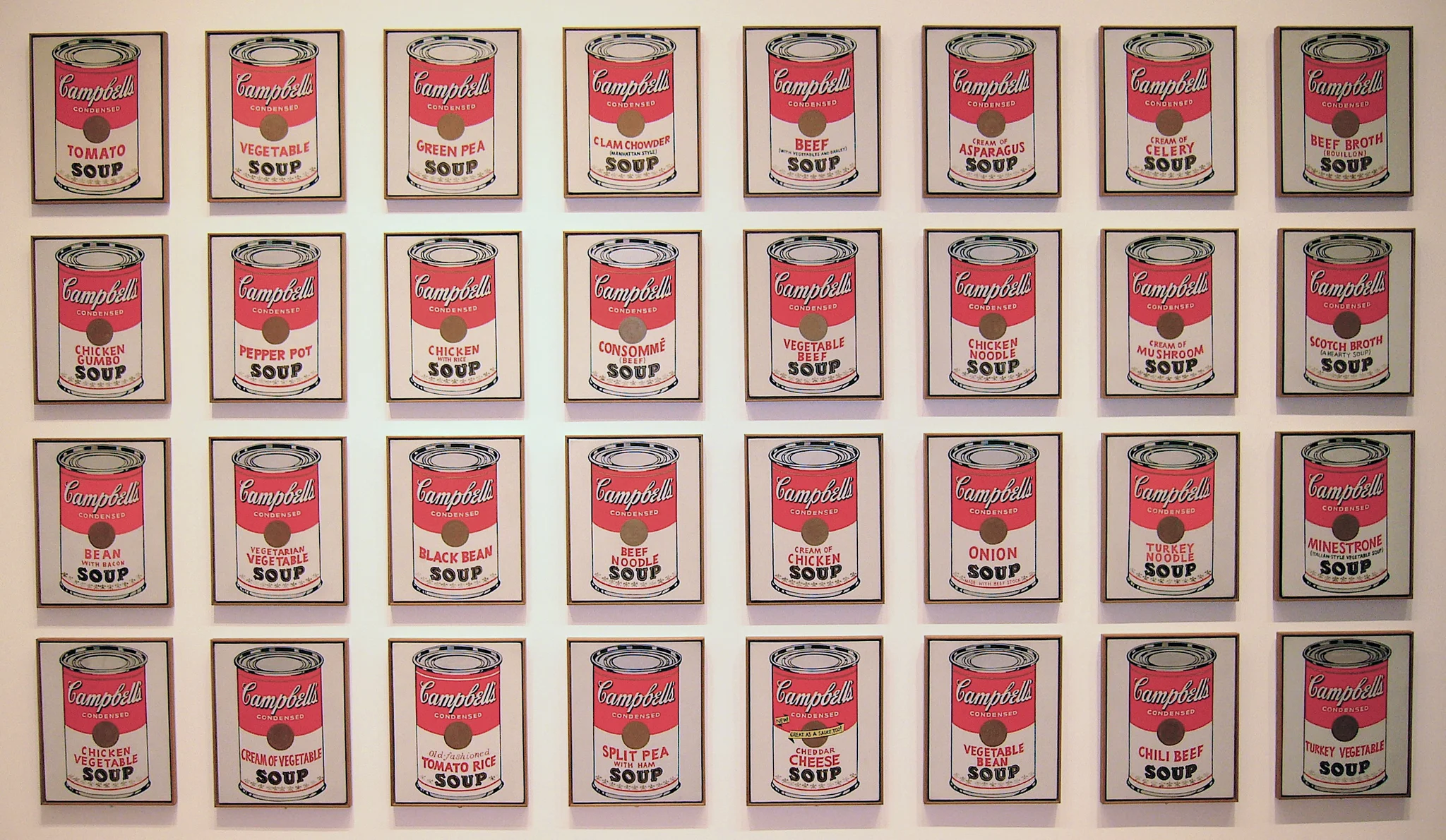
Campbell’s Soup Cans © Wikimedia Commons
Silver wigs and soup cans. Warhol turned the supermarket aisle and the tabloid headline into an altar. His world is one of mechanical repetition, electric colors, and the haunting beauty of things made to be sold.
Key Movements
Pop ArtA quick note
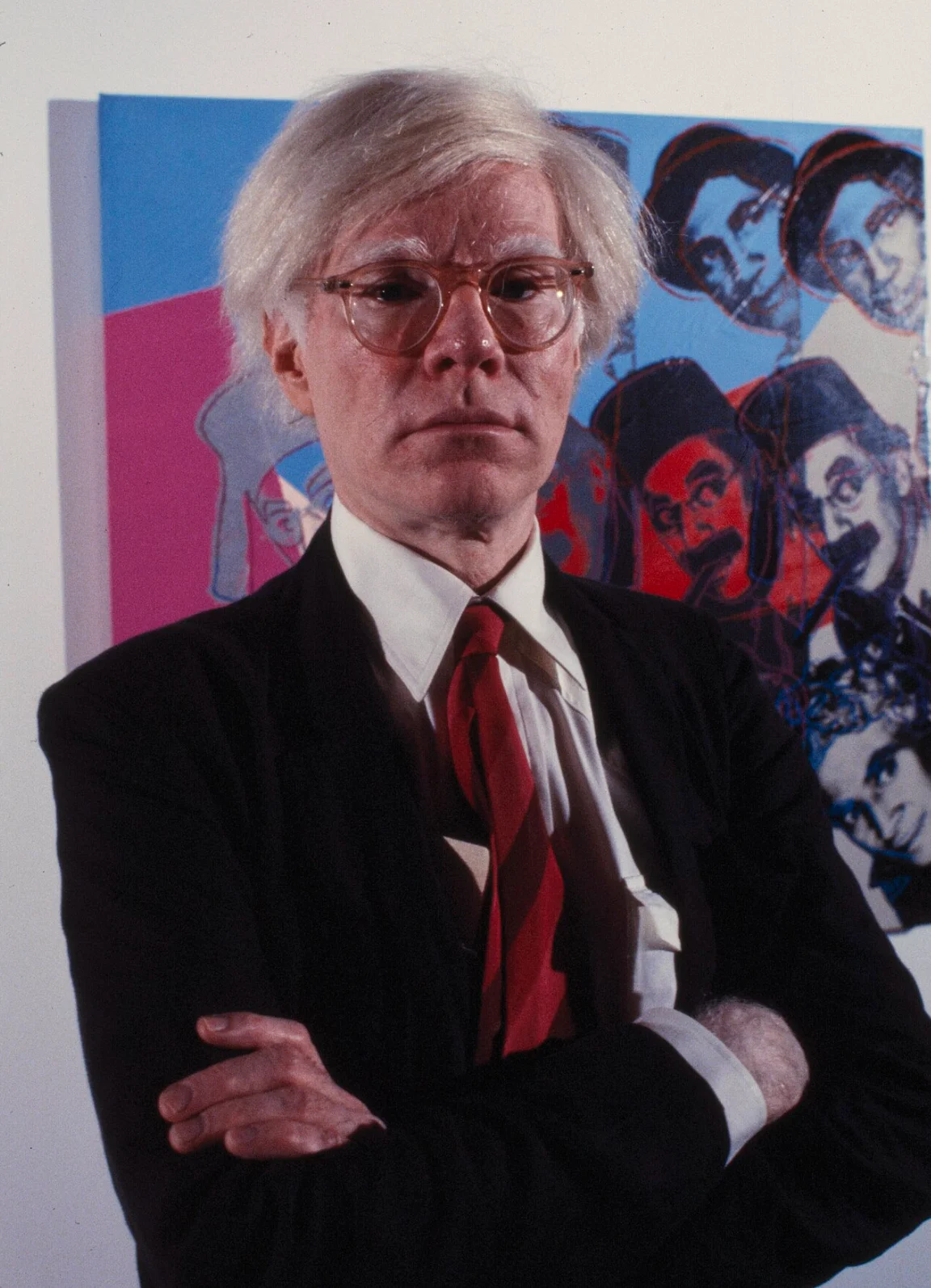
Born to Rusyn immigrants in industrial Pittsburgh, Andy Warhol’s journey was a climb from the soot of Pennsylvania to the silver-lined walls of the New York avant-garde. He began by drawing shoes for fashion magazines, a commercial start that would forever inform his obsession with consumerism and the shimmering surface of celebrity. In his studio, known as the Factory, he blurred the lines between high art and assembly-line production.
You're watching a man who treated the silkscreen like a printing press, capturing the tragic glamour of Marilyn Monroe and the mundane uniformity of a Coca-Cola bottle with the same detached, cool intensity. He transformed the artist into a brand, proving that in a world of mass media, the image was more powerful than the object itself.
Did you know?
As a child, Warhol suffered from a neurological disorder that often kept him bedridden and away from school. During these lonely periods of St. Vitus' Dance, he retreated into Hollywood magazines and scrapbooking, developing the voyeuristic fascination with celebrity and mass-produced imagery that would eventually redefine 20th-century art.
Why are they important?
The Democratic Image: He dismantled the elitism of the art world by proving that a soup can could be as meaningful and aesthetically valid as a traditional landscape.Mechanical Soul: By championing the silkscreen, he challenged the idea of the unique original and pioneered the use of mass production techniques in fine art.Celebrity as Medium: He was among the first to understand that fame itself was a material, turning his own persona into a global brand and predicting our modern obsession with digital identity.
Andy Warhol
- Born
- Died
- Nationality
- American
Artlovers Tip
Look closely at the edges of his silkscreens. Despite the mechanical process, you will find accidents—ink splatters and misalignments—where the human hand betrays the machine. To truly feel his scale, visit the Andy Warhol Museum in Pittsburgh, where the sheer volume of his output reveals a man who feared boredom more than death.