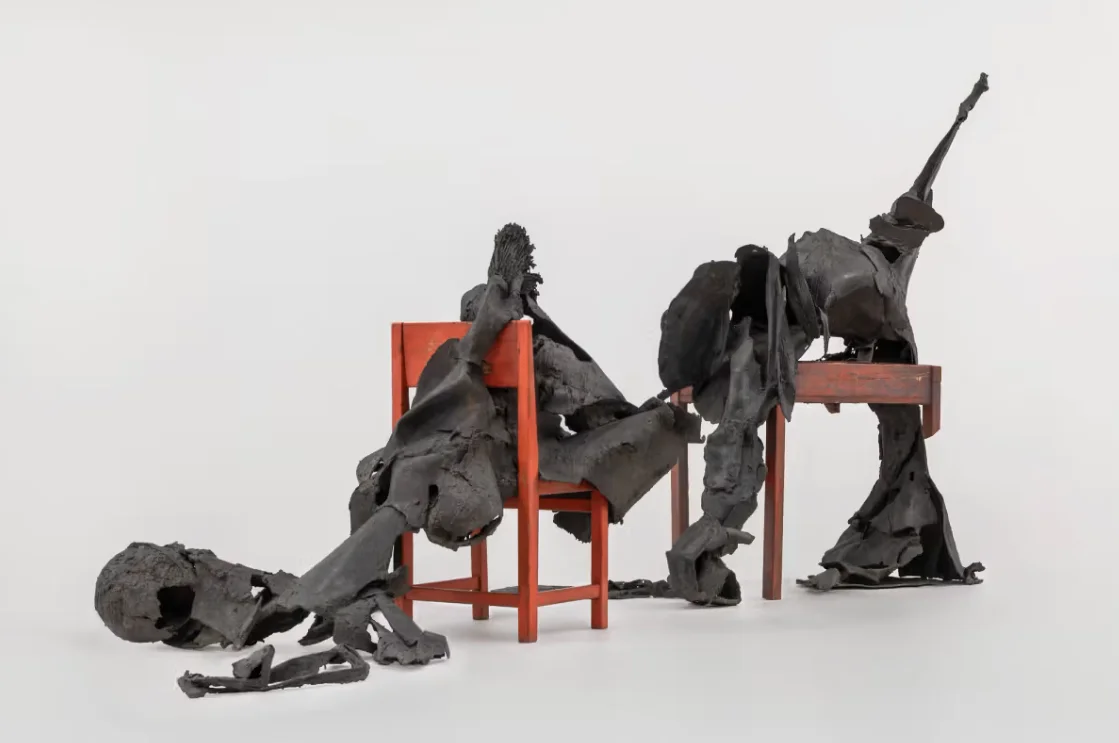
A table, a chair and a whole world of relationships: Wessel Couzijn transforms familiar objects into an expressive sculpture about human connection, movement and space.

Don't try to identify the objects too literally. Instead, watch how volume, gaps, tension and balance create a sense of interaction between forms.
Inside the exhibition
Wessel Couzijn: Rendezvous of Table and Chair is on view at the Kröller-Müller Museum in Otterlo from 17 January to 1 November 2026. The museum lists it among its current exhibitions.
Couzijn was an important Dutch sculptor whose work developed from a more figurative language towards increasingly expressive and abstract forms. His sculptures often retain recognisable references to the human body or everyday objects while breaking them apart and recombining them into dynamic structures.
The title Rendezvous of Table and Chair is particularly characteristic of this approach. Furniture becomes more than furniture: the relationship between two familiar objects can suggest human presence, encounter and communication.
Couzijn's work is also part of the wider history of post-war European sculpture, when artists increasingly challenged the traditional idea of sculpture as a solid, self-contained object. Space, movement, voids and the relationship between different elements became just as important as mass.
The Kröller-Müller has a particular connection to Couzijn's sculpture. Its collection includes Vliegend (1957), a bronze sculpture displayed in the museum's sculpture garden. The museum's collection documentation also records Couzijn's Model voor Groot landschap (1970), a large multi-part work in aluminium and steel.
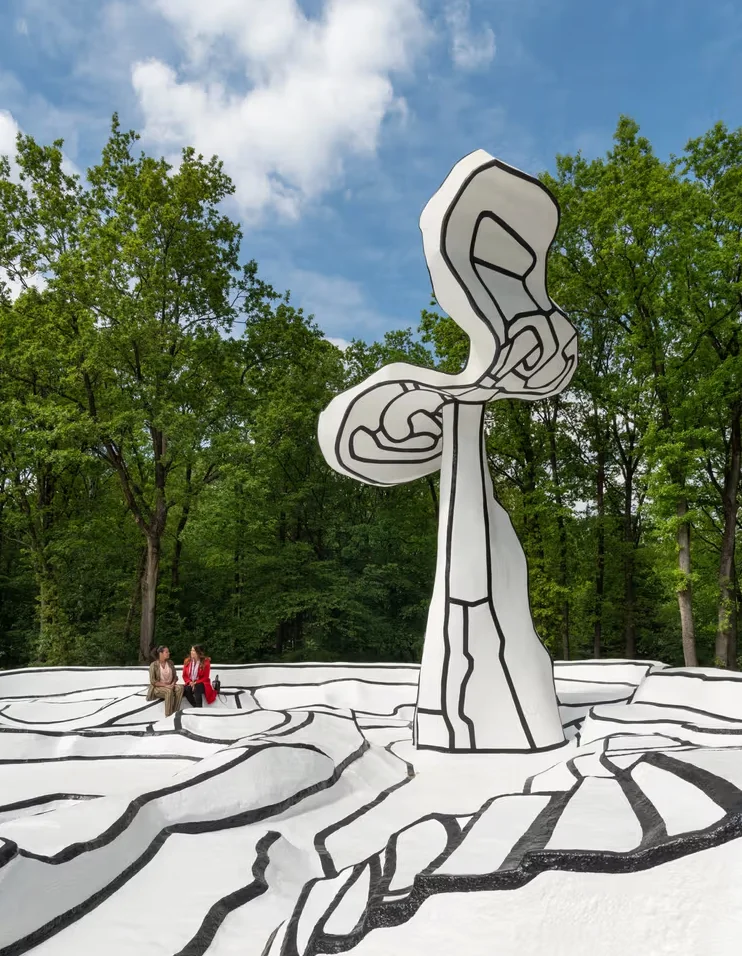
That makes this exhibition especially interesting to combine with the museum's sculpture garden, where Couzijn's work can be experienced alongside major works by artists including Barbara Hepworth, Jean Dubuffet, Marta Pan and many others. The museum describes the garden as one of Europe's largest, with around 200 sculptures integrated into the landscape.
Worth travelling for?
Worth the stop if you love sculpture. This is not a blockbuster exhibition, but its intimate scale makes it a good discovery within a much bigger art-and-nature destination. The best strategy is to combine it with the Kröller-Müller collection and sculpture garden, turning a 30-minute exhibition into part of a full art day.
Worth the trip: ⭐⭐⭐⭐
Wessel Couzijn. Rendezvous of Table and Chair
Hours & rating from Google