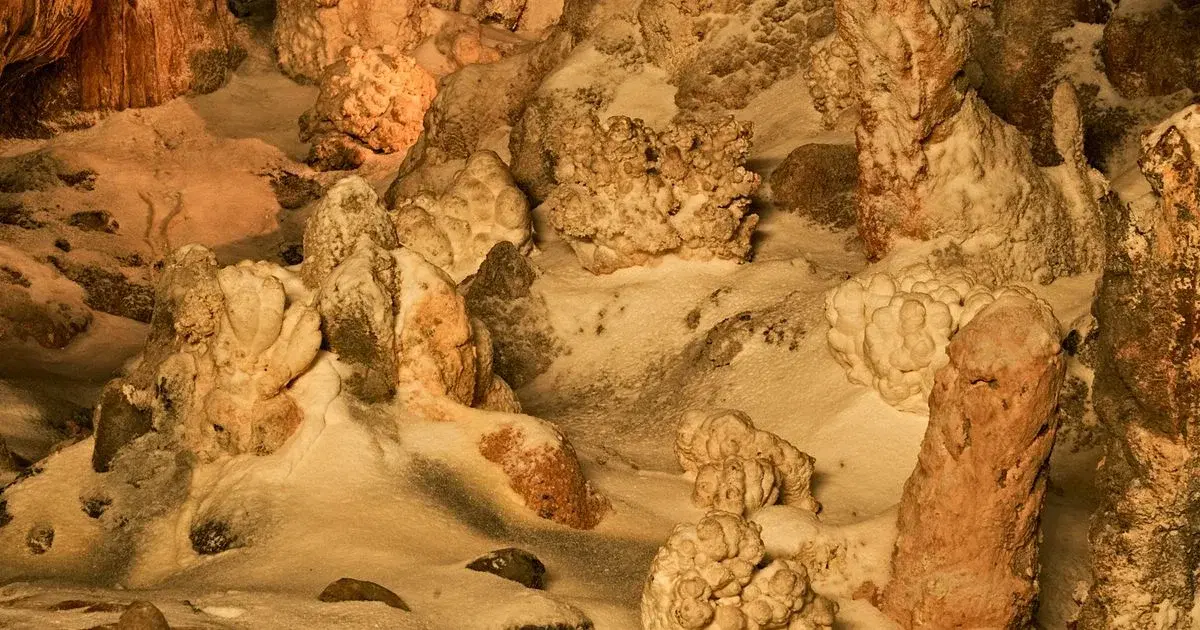
A trio of shows blending prehistoric myths, rooftop mosaics, and East Village camp against the sharp Colorado light.
Exhibition Highlights - What you'll see
The Aspen Art Museum transforms this summer into a space where geological time meets the glitter of the 1980s. The season brings together the massive, cave-like installations of Adrián Villar Rojas, the poignant, jeweled legacies of Arch Connelly, and Kerstin Brätsch’s living rooftop sculptures. It is an exploration of what survives—whether it is a fossilized idea or the joy found in the face of a pandemic—set within the museum's striking wood-grid architecture.
You're watching the sun hit a life-size triceratops skull in a space that feels like a modern grotto. The scale shifts from the intimate sparkle of Connelly’s beaded surfaces to the expansive, plant-filled mosaic benches on the roof, where the mountain air mixes with the scent of damp earth and old stone.
Worth the trip
- A prehistoric encounter: See Villar Rojas’s life-size triceratops skull, a work co-commissioned with Audemars Piguet that rethinks the origins of art and Neanderthal creativity.
- Rediscovered camp: View the first museum survey of Arch Connelly, featuring works unseen for over thirty-five years that blend minimalist forms with sequins and pearls.
- Living fossils: Sit on Kerstin Brätsch’s rooftop mosaic benches, created using 17th-century Italian techniques and designed to evolve as local plants grow through them.
How to experience it
Begin in the lower galleries and work your way up, moving from the dark, subterranean atmosphere of the cave installations toward the bright, open rooftop. The transition mimics a geological ascent, ending with the expansive views of the surrounding peaks. After leaving the museum, walk toward the Roaring Fork River to let the scale of the Colorado landscape settle against the man-made myths you just witnessed.