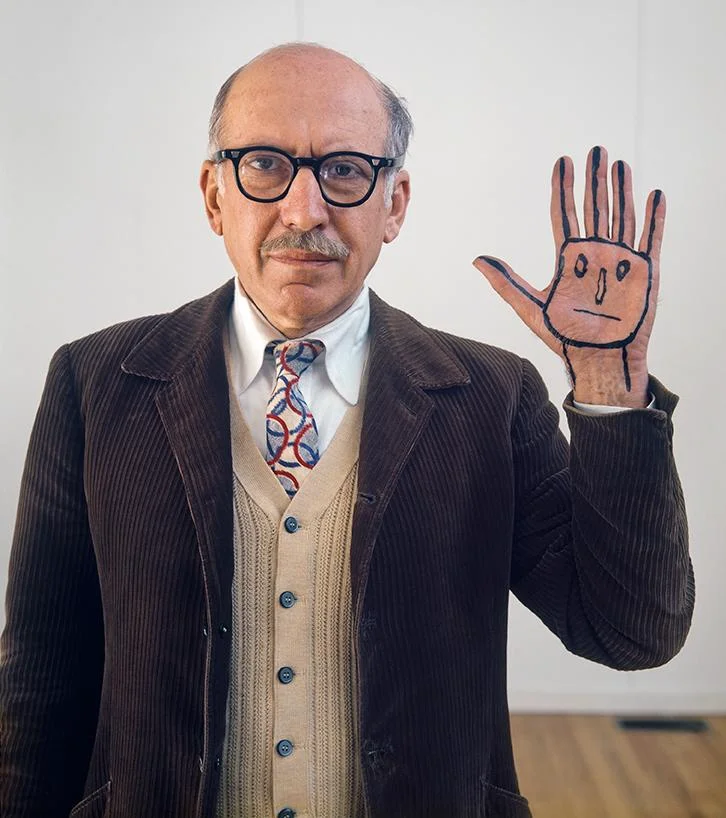
A writer who draws: Saul Steinberg turned the line into a language capable of parodying, questioning and reinventing the modern world.

Read Steinberg's drawings as ideas disguised as jokes. The quickest laugh is often followed by a second thought about perspective, identity, language or the absurdity of modern life.
Inside the exhibition
Saul Steinberg, artista is a major retrospective organised by the Fundación Juan March with the support of the Saul Steinberg Foundation. The exhibition originated in Madrid in 2024 and has subsequently travelled in Spain, including to Palma. The current travelling version is being presented at the Museu Fundación Juan March in Palma during 2026–27.
Steinberg (Râmnicu Sărat, Romania, 1914 – New York, 1999) is particularly famous for his almost six-decade collaboration with The New Yorker, where his drawings and covers became part of the visual language of American culture. But the exhibition makes clear that reducing him to a magazine illustrator misses the radical nature of his practice.
He described himself as “a writer who draws”, an apt phrase for an artist whose work constantly moves between image and language. His drawings can behave like essays, visual jokes, architectural diagrams, fictional maps or philosophical propositions. His career resists the conventional categories of painting, drawing, illustration and literature.
The exhibition brings together drawings, paintings, prints, collages, three-dimensional objects, photographs, artist's books, magazines and film, allowing visitors to see how these different forms continually fed into one another.
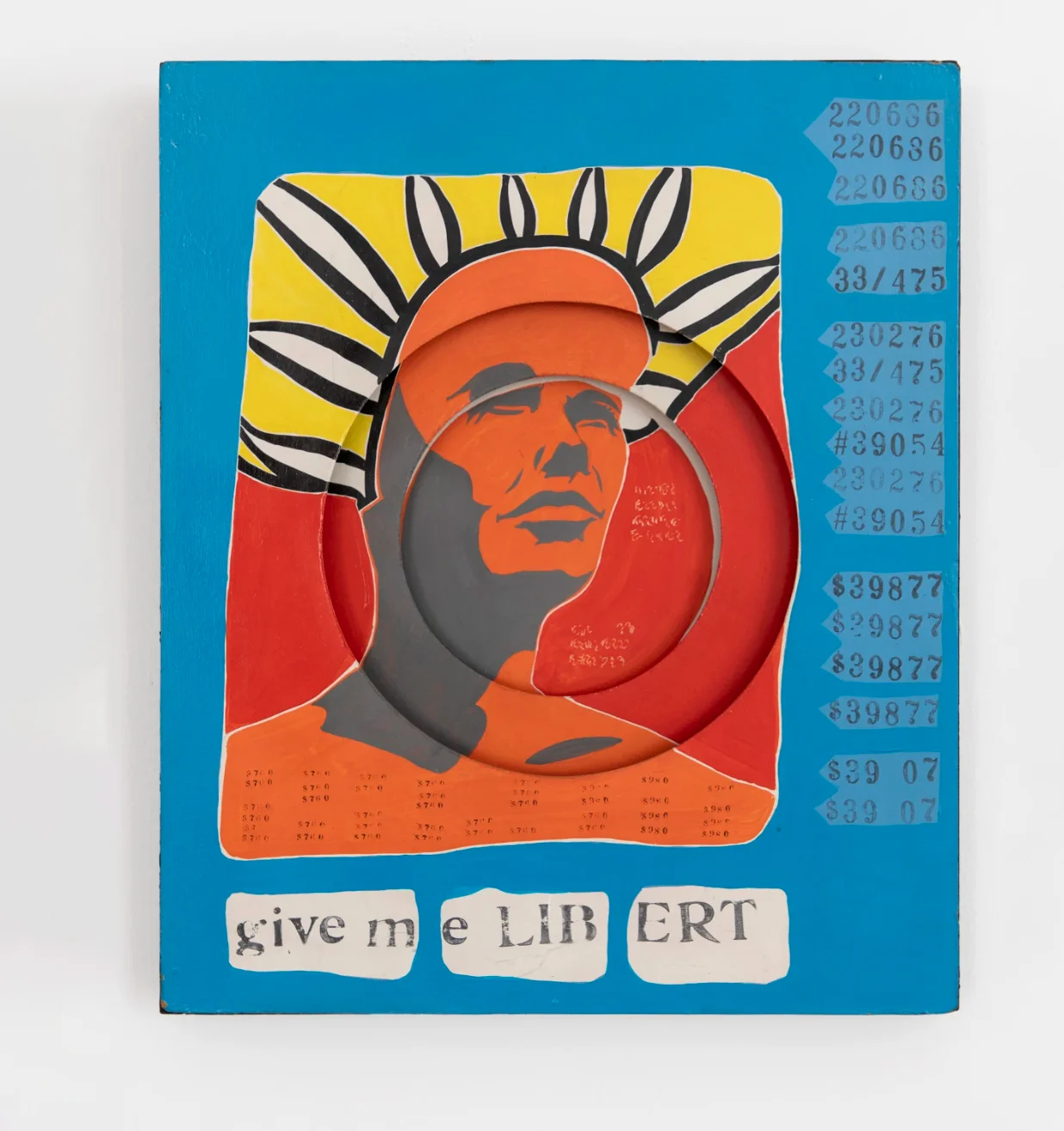
One of the most interesting aspects of Steinberg's work is his use of imitation and appropriation. He could borrow visual languages from different artistic movements and transform them into something recognisably his own. This explains why critics have found him so difficult to classify: rather than belonging to one movement, he moved freely between them.
The result is an exhibition that feels surprisingly contemporary. Steinberg was fascinated by the artificial nature of representation — maps that become territories, lines that become objects, drawings that imitate photographs, and images that expose how constructed our view of the world really is.
Worth travelling for?
A hidden gem for curious art lovers. Steinberg is one of those artists who makes you realise how artificial the boundaries between fine art, illustration, literature and design really are. Funny, intelligent and unexpectedly profound — and particularly rewarding if you enjoy artists who make you think while you smile.
Saul Steinberg, Artist
Hours & rating from Google