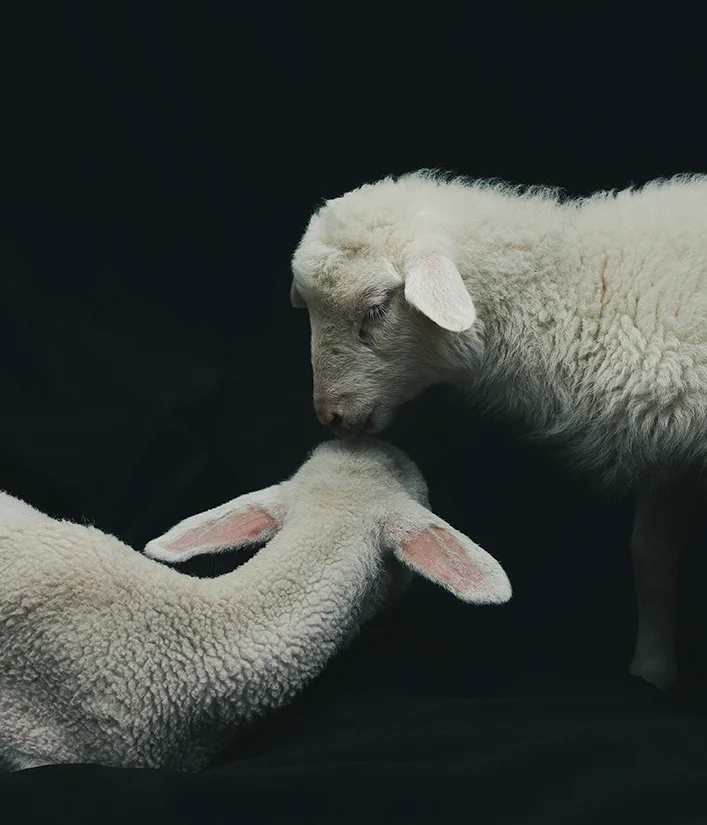
What happens when an animal is no longer photographed as “nature” — but as someone? Contemporary portrait photography with an ethical, documentary and activist approach.

Inside the exhibition
Estela de Castro uses the language of portraiture to question how humans look at other species — not as objects, symbols, or background, but as sentient individuals with their own presence and emotional life. The exhibition is grounded in the wider debate around animal sentience, moral consideration and the possibility of expanding the idea of “personhood” beyond humans.
Persona presents portraits of non-human animals through a deliberately humanizing photographic gaze. The project starts from a simple but uncomfortable shift: instead of asking what animals are “for,” it asks who they are.
You’re watching:
- Animals portrayed as individuals, not categories
- Faces and bodies treated with the dignity of formal portraiture
- A visual challenge to the idea that emotional experience belongs only to humans
- Images that invite reflection on discrimination based on species
- Photography used as a space for empathy, not spectacle
The exhibition connects art with a major cultural and legal shift: in Spain, animals stopped being legally treated as things and were recognized as sentient beings on January 5, 2022.
Worth travelling for?
Yes — especially if you believe photography can change the way we relate to other living beings.
Because Persona doesn’t rely on shock. It works through presence. By placing animals in the position usually reserved for human portrait subjects, Estela de Castro asks us to reconsider hierarchy, empathy, and the limits of moral attention.
It matters because the exhibition touches one of the most urgent ethical questions of our time: who gets to be seen as an individual, and who remains reduced to a resource, species, function, or label?
Experience as an Artlover
Look at each image as a portrait, not as an animal picture
Spend time with the gaze: that is where the relationship changes
Notice how your own assumptions appear as you look
Think about the difference between “sentient being” and “object”
Let the exhibition stay uncomfortable — that discomfort is part of its intelligence
Persona. Estela de Castro
Hours & rating from Google