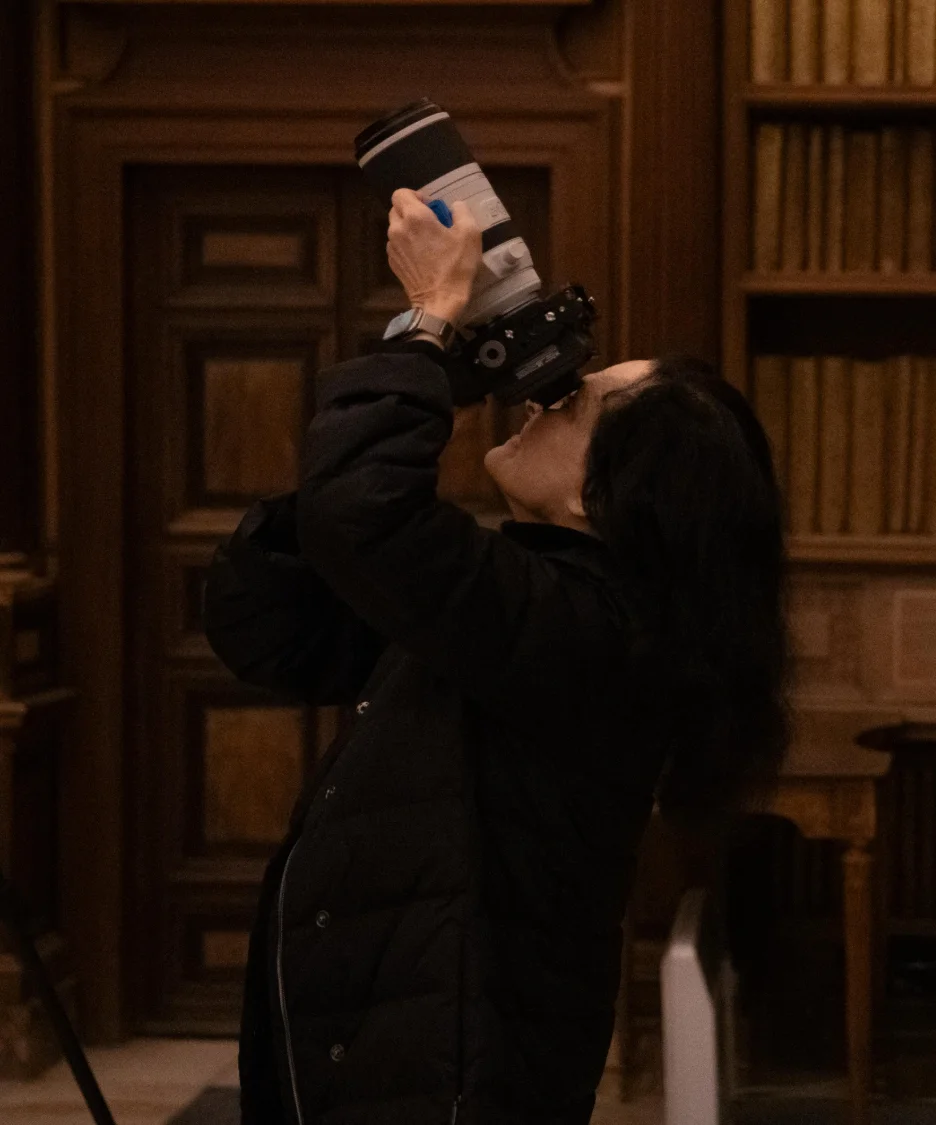
Stone, sky, power, faith, and time. Isabel Muñoz turns El Escorial into something more than architecture: a cosmic question.

Inside the exhibition
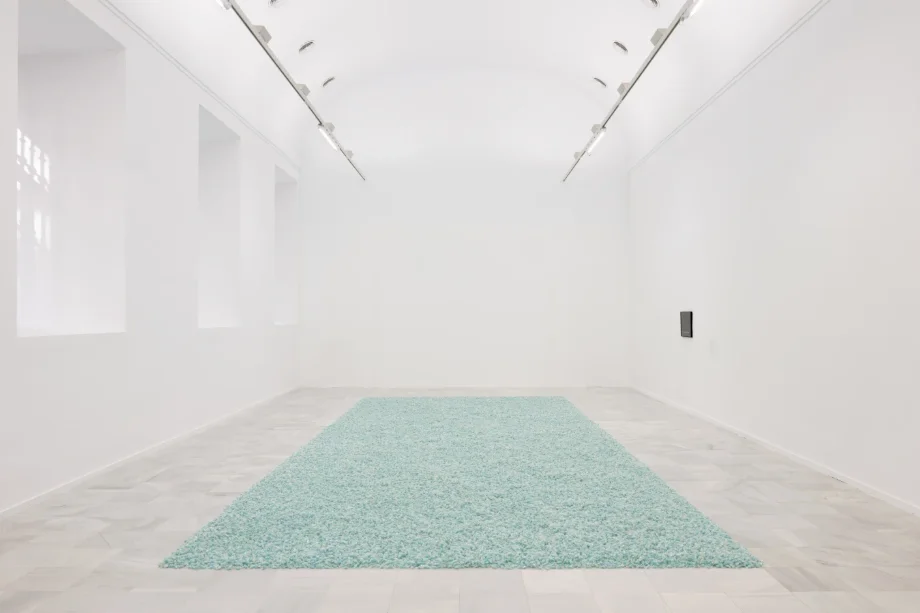
Contemporary photography expanded into video, installation, objects, immersive experience, landscape research, and sensory storytelling.
The project goes beyond the still image and opens into a more physical, telluric experience, connecting photography with territory, history, nature, and symbolic architecture.
Las piedras del cielo is Isabel Muñoz’s investigation into Philip II of Spain, the Royal Monastery of San Lorenzo de El Escorial, and the surrounding forest of La Herrería. The project is part of Cuadernos de campo, a program focused on the natural spaces of Royal Sites managed by Patrimonio Nacional.
You’re watching:
- Photography, objects, video, and installation
- El Escorial understood as architecture, symbol, territory, and cosmic order
- Granite, stone, water, construction, and landscape as living memory
- A dialogue between Renaissance knowledge, human reason, and divine revelation
- A project that links geology, monarchy, spirituality, and imagination
The exhibition presents stone as a threshold: between the time of the earth, the human desire for transcendence, and our need to create meaning from nature’s most elemental materials.
Worth travelling for?
Yes — especially if you love photography that expands into history, architecture, and atmosphere.
Because Isabel Muñoz doesn’t simply photograph El Escorial. She reimagines it as a site where landscape, power, knowledge, faith, and matter converge. Philip II conceived the monastery within a larger symbolic order, connected to the Temple of Jerusalem and the idea of cosmic harmony.
It matters because the show invites us to see heritage not as something fixed in the past, but as a living space where nature, architecture, and imagination still speak to each other.
Experience as an Artlover
Don’t approach it only as a photography show — think of it as an experience of matter, time, and place
Look for the presence of stone: not just as material, but as memory
Think about El Escorial as both building and idea
Let the audiovisual and installation elements slow down your perception
If you can, connect the visit with a future trip to El Escorial and La Herrería
Las piedras del cielo
Hours & rating from Google