A cosmic expansion of pointillism where thousands of paint droplets transform into vast landscapes of light and atoms.

Look closely at Large Threefold 1. The atomic effect is created by dots within dots; finding the smallest pinprick of color helps you appreciate the sheer labor involved in building these immense fields of light.
Inside the exhibition
Ian Stephenson’s work feels like staring into the heart of a star or the microscopic structure of a cell. This exhibition focuses on his pivotal large-scale paintings from the late 1960s and early 70s, a period where he perfected his concept of the atomic surface. By allowing paint to fall vertically like rain onto horizontal canvases, Stephenson merged the analytical precision of physics with the emotional depth of English Romanticism.
You're watching thousands of individual droplets of oil and enamel converge on canvases that span several meters. From a distance, works like Thames or Diorama appear as soft, radiant clouds of color. As you move closer, the hazy atmosphere dissolves into a precise, rhythmic dance of uncountable pinpricks, revealing an intricate and infinite universe contained within a single frame.
Worth travelling for?
- Cinematic History: View the 1960 work Screen, a piece famously featured in Michelangelo Antonioni’s cult film Blowup.
- Epic Proportions: This is a rare opportunity to see Stephenson’s largest canvases together, showcasing his transition from intimate sketches to monumental abstractions.
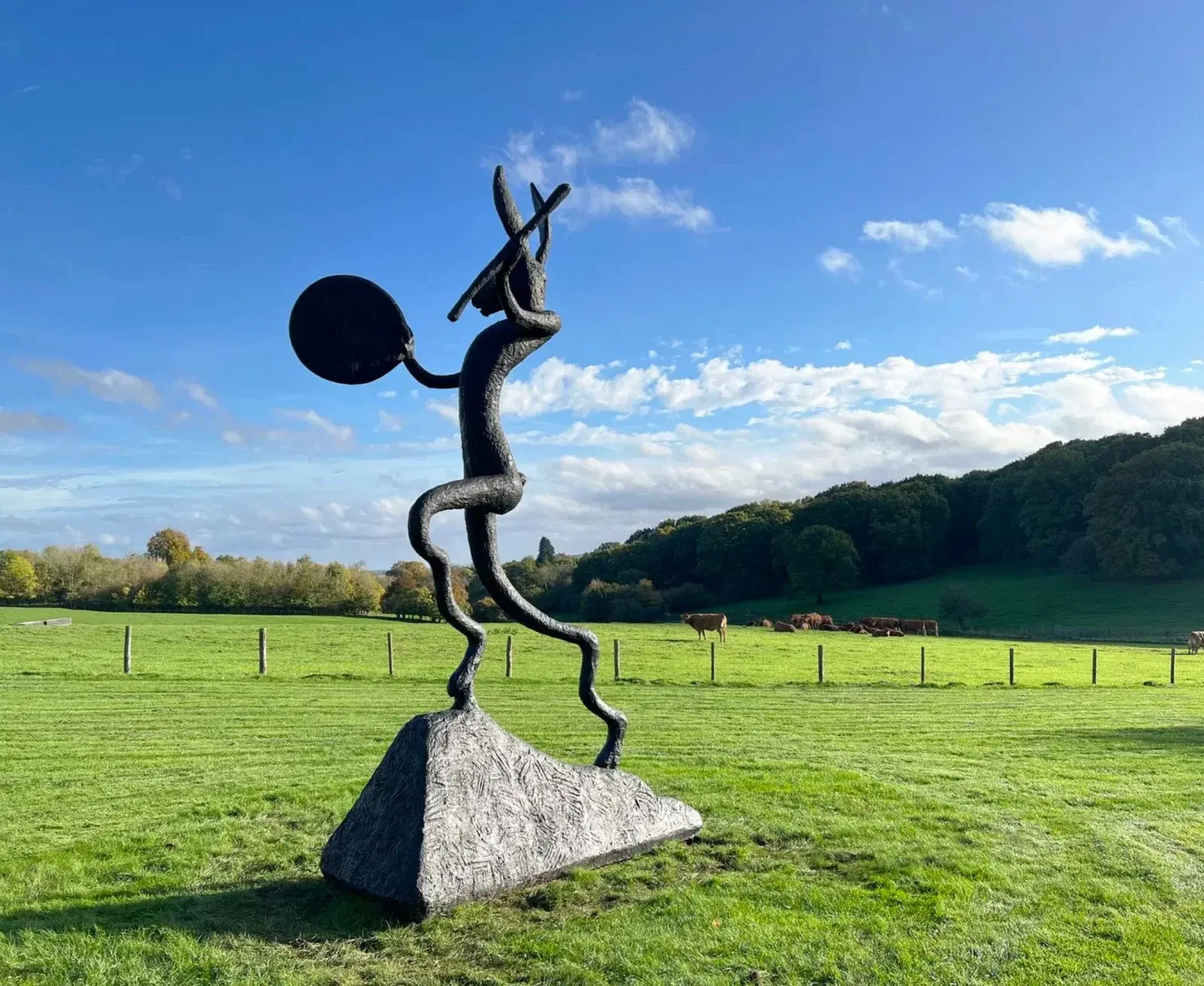
- Stunning Context: Held at Roche Court, the exhibition allows these celestial paintings to sit in dialogue with the sweeping Wiltshire landscape and the sculpture park.
Experience as an Artlover
Walk slowly through the main gallery to feel the shift in scale from the massive paintings to the preparatory sketches in the Artist’s House. After absorbing the rhythmic rain of Stephenson's paint, wander through the grounds of Roche Court to let the English countryside provide a natural grounding for his cosmic abstractions.