Contemporary audiovisual installation and sculpture, with conceptual, symbolic, and postcolonial layers.

Inside the exhibition
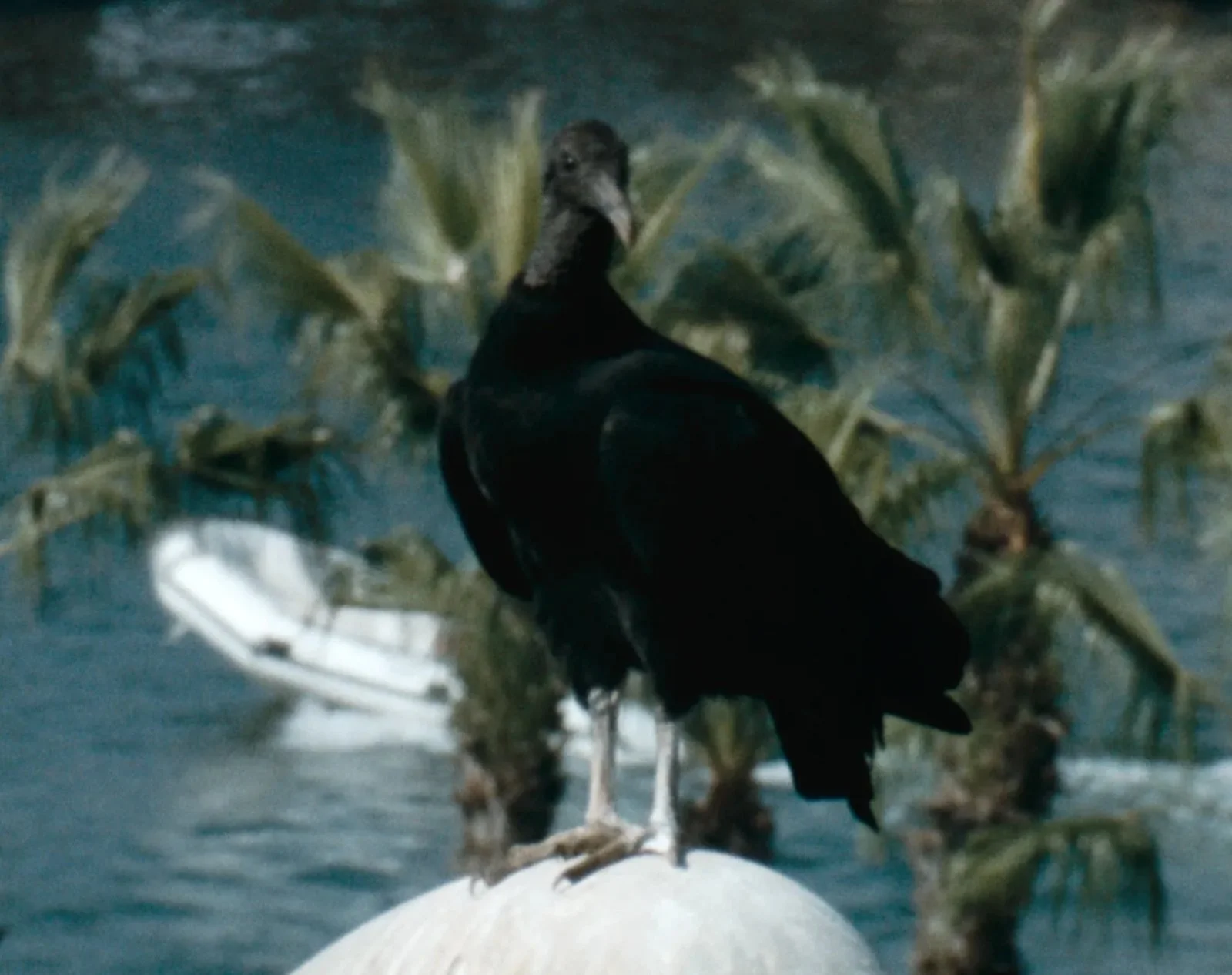
The exhibition combines one audiovisual piece, Gallinazo, with five bronze sculptures, using the figure of the black vulture — Coragyps atratus — to explore memory, identity, classification, exclusion, and the violence of naming.
Cathartes unfolds around a private club, childhood memories, social belonging, exclusion, and the silent presence of a gallinazo watching from above.
The video moves between different moments in the narrator’s life: childhood, the return after ten years in Europe, family life, and an 18th-century episode in which a European naturalist arrives sick on the Peruvian coast. These layers of time overlap, connected by the vulture’s gaze.
You’re watching:
- A private club as a symbolic machine of continuity and belonging
- A vulture that becomes a figure of the limit: inside/outside, life/death, wild/civilized
- The violence of classification: how naming something can reduce, fix, and stigmatize it
- Five bronze vultures, distorted and elevated, as if watching us from a distance
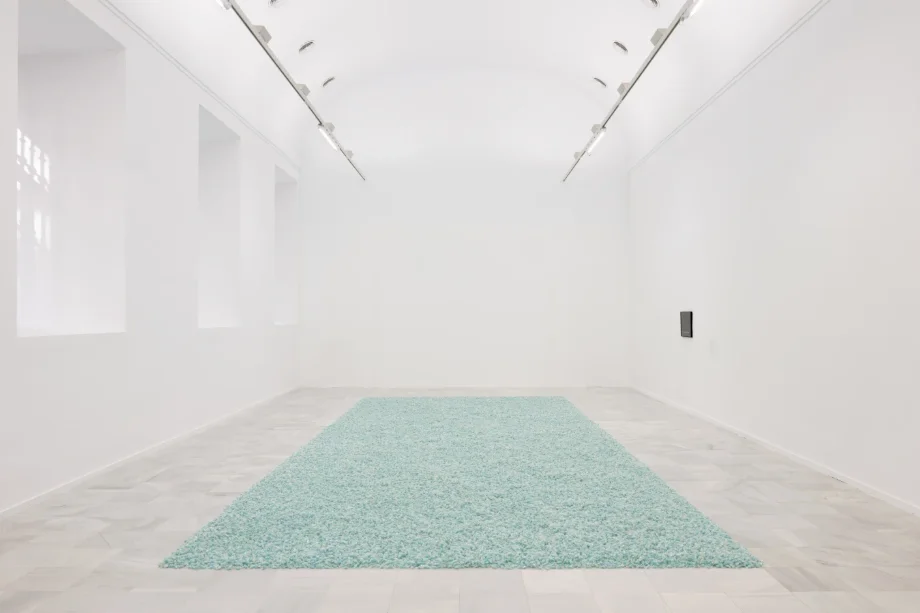
- A gallery space covered in blue raffia, turning the white cube into an artificial skin
The exhibition feels strange, layered, and quietly disturbing — like a memory that refuses to stay clean.
Worth travelling for?
If you like contemporary art that works through symbols, narrative, and discomfort.
Because Cathartes is not really “about” a vulture.
It is about what societies refuse to see — death, decay, exclusion, wildness, impurity — and how language can create the illusion that those things do not exist.
Experience as an Artlover
Watch the video as a layered memory, not a linear story
Pay attention to who is looking: the narrator, the bird, the naturalist, you
Move around the bronze sculptures slowly — their forms resist immediate recognition
Notice the blue raffia: the space itself becomes part of the fiction
Let the discomfort stay with you; this exhibition is built around what cannot be easily absorbed or named
Cathartes
Hours & rating from Google