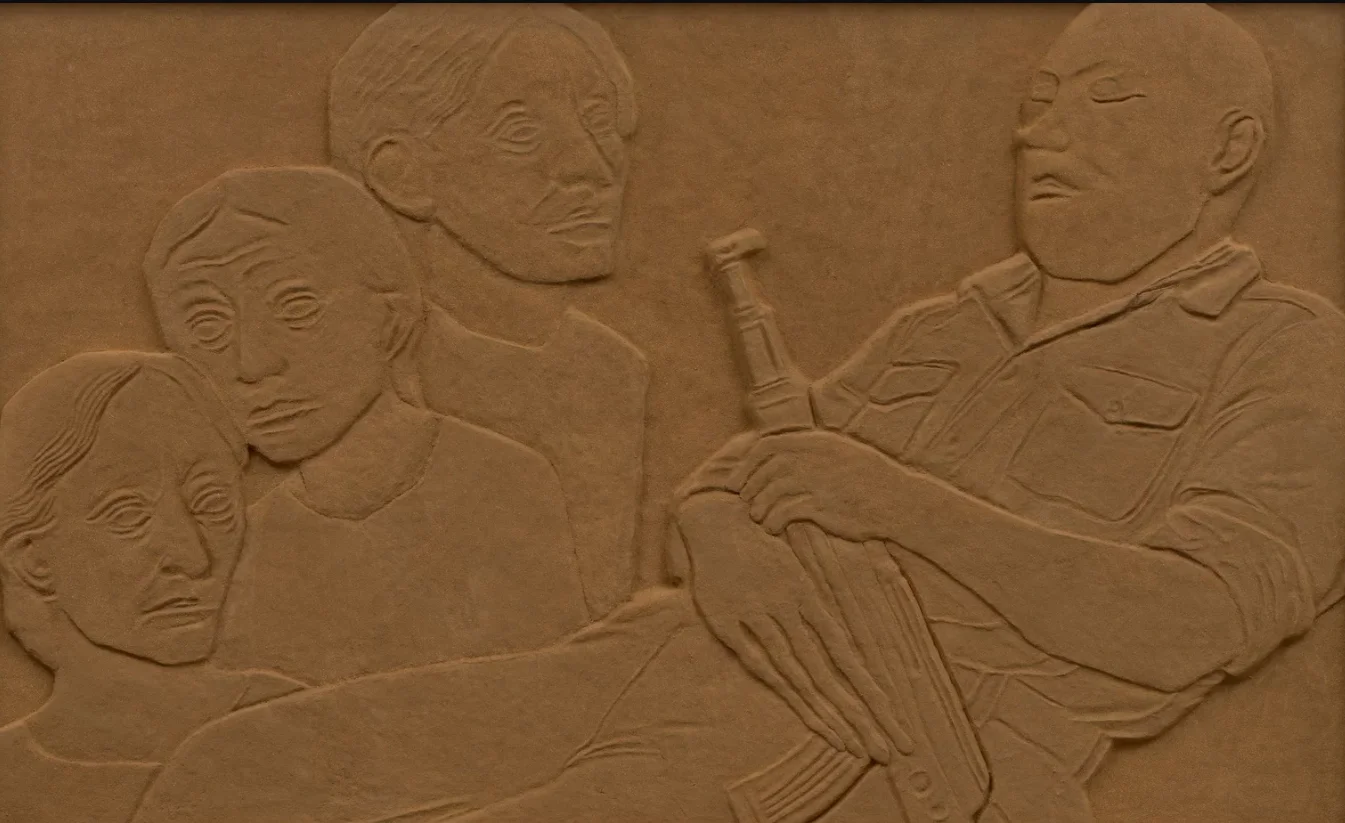
Image creditAli Cherri, Counter Monument (for the fallen), 2025 © Courtesy of the artist & Almine Rech Gallery

At a glance

Around 1 hour

Bodies, ruins and monuments become witnesses: Ali Cherri asks who gets to write history — and what survives when power decides what should be remembered.

Why go

For the first time, WIELS brings together several major bodies of work by Ali Cherri, spanning film, sculpture, watercolour and installation. The exhibition moves from the disciplined individual body to the institutions that control memory — the military, the nation-state and even the museum itself.

You'll see

The Sentinel · Counter Monument (for the fallen) · Film · Sculpture · Watercolour · Archaeological fragments · Mud, bronze and marble · Soldiers · Ruins · Hybrid creatures · Institutional critique

Pace of visit

Medium-high conceptual density. The exhibition includes moving-image work, so allow enough time for The Sentinel rather than treating the films as background.

Don't miss

The Sentinel (2026), Cherri’s new film, in which a young French recruit moves between the controlled routines of military life and nocturnal encounters that destabilise his place within that system. Also look for Counter Monument (for the fallen) (2025) and the sculptures combining fragile mud with bronze, marble and displaced archaeological fragments. Counter-Monument (For the Fallen) is a relief from 2025. Materials: Wood, extruded polystyrene and clay coating, vinyl glue, and pigments. Dimensions: 247 x 300.1 x 51.4 cm. Depiction: It shows a relief of a soldier—who appears to be resting, suffering, or dead—watched over by three female figures. Themes: It explores suspended time, the waiting for news from afar, and a critique of power structures and traditional monuments.

Artlovers Tip

Look at what each material is supposed to represent. Bronze and marble traditionally promise permanence; mud suggests fragility. Cherri deliberately reverses that logic.

Artlovers relevance

Inside the exhibition

Meet the artist

Ali Cherri

Key Movements

Conceptual Art

Medium

Video Art

Description

Soul Witness asks how power becomes embedded in bodies, objects and monuments. Soldiers appear not as heroic figures but as vulnerable individuals trapped inside structures of discipline and surveillance. Elsewhere, broken statues, mourners and unstable hybrid creatures challenge the apparent permanence of monuments and the historical narratives they are supposed to preserve.

Material is crucial. Cherri combines mud — fragile, impermanent and associated with the earth — with bronze, marble and ancient stone, materials traditionally linked to authority, monuments and cultural permanence. By allowing mud to undermine those supposedly stronger materials, he reverses the usual hierarchy between what institutions consider valuable and what they discard. Archaeological fragments acquired through markets and auctions also raise uncomfortable questions about displacement, collecting and the museum’s role in deciding how objects are interpreted.

Ali Cherri (b. 1976, Beirut) is a Lebanese visual artist and filmmaker whose practice moves between archaeology, political history, ecology and the body. Ruins and ancient objects recur throughout his work, not as passive remains of the past but as materials that continue to carry the consequences of violence and political authority. WIELS curator Helena Kritis frames this idea through Cherri’s recurring premise that matter itself can remember.

Exhibition

Ali Cherri. Soul Witness

Because you are an artlover,

Join our community of art enthusiasts and discover exhibitions, artists, and masterpieces tailored to your tastes. Get personalized recommendations and never miss a must-see show again.

Join us