One of the most powerful acts of revenge and resistance ever painted.
Dates
The story behind it
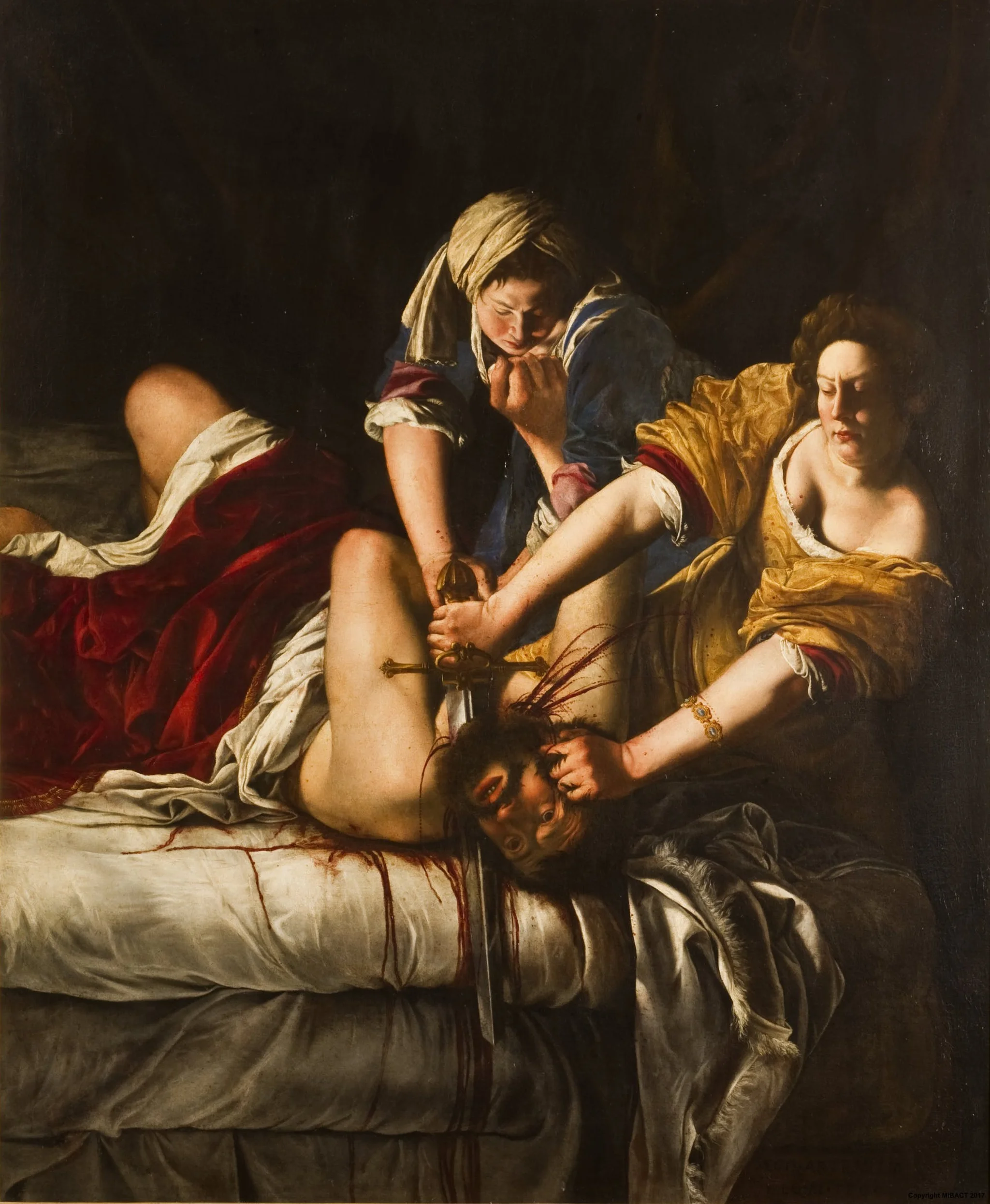
Artemisia Gentileschi's *Judith Slaying Holofernes* is a visceral and dramatic depiction of the biblical story from the Book of Judith. It portrays the moment when Judith, a Jewish widow, beheads the Assyrian general Holofernes in his tent. Holofernes, intending to destroy Judith's city, is shown vulnerable and incapacitated, while Judith, aided by her maid, exerts her strength and determination to end his life. Gentileschi chooses to depict the most brutal point in the story - not simply the aftermath, but the act itself, marking a departure from earlier, more restrained representations.
The painting captures the struggle and the violence of the scene with unflinching realism.
This artwork holds immense historical significance, particularly in the context of Baroque art and the artist's own life. As one of the few recognized female artists of her time, Gentileschi infused the painting with her personal experiences and perspectives.
Gentileschi's *Judith Slaying Holofernes* is a masterpiece of Baroque painting, showcasing a mastery of dramatic lighting, dynamic composition, and realistic depiction. The painting utilizes chiaroscuro, a technique popularized by Caravaggio, to create a strong contrast between light and shadow, which heightens the emotional intensity and draws the viewer's attention to the central action.
Many scholars interpret the work as a powerful statement about female empowerment and resistance against male oppression.
Look closer
Artemisia Gentileschi painted this subject with an intensity rarely seen before.
Many viewers connect the emotional force of the work to her own life: Artemisia survived sexual assault and a humiliating public trial early in her career. Unlike many male painters who treated Judith as elegant or passive, Artemisia presents her as strong, focused, and fully in control.
Worth the journey?
Yes — absolutely worth the trip.
This painting still shocks audiences today because it feels emotionally real rather than symbolic. Beyond its violence, it represents power, survival, and the reclaiming of agency. Seeing it in person reveals how masterfully Artemisia uses light, composition, and physical tension to create overwhelming drama.
See it like an Artlover
First observe the composition from a distance to understand the triangular force connecting the three figures. Then move closer and focus on the expressions, arms, and hands — the physical effort is essential to the painting’s emotional impact.
Artlovers Tip:
Don’t reduce the painting to “violence.” Spend time looking at Judith’s concentration rather than the act itself. Artemisia transforms a biblical scene into something psychologically modern — a painting about determination, trauma, and power as much as revenge.
Judith Slaying Holofernes
Hours & rating from Google