Dates
Meet the artist
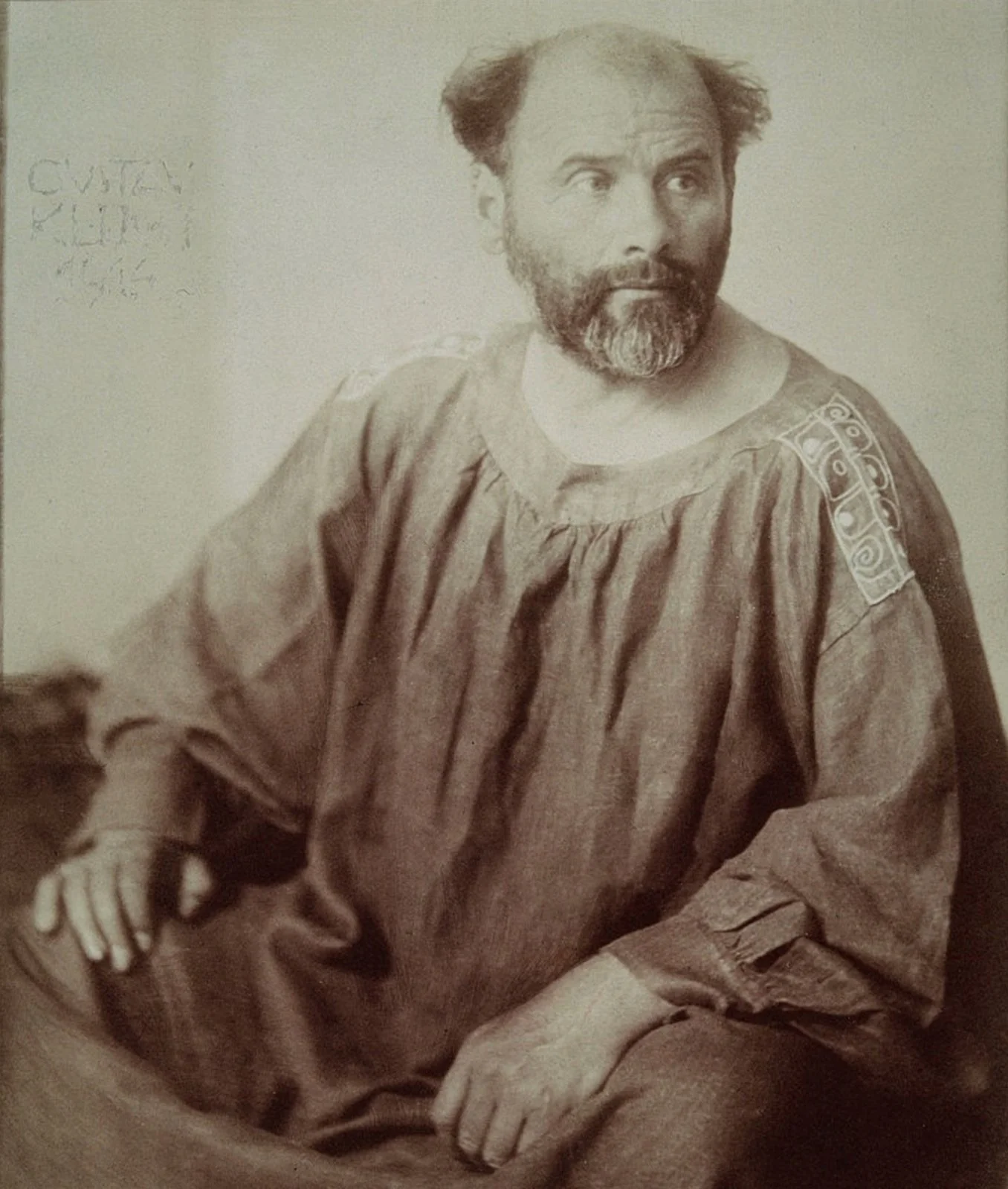
Gustav Klimt – AustrianMore info
More details
- Movement
- Art Nouveau, Symbolism
- Medium
- Oil Painting
- Genre
- Allegory, Symbolic Painting
The story behind it
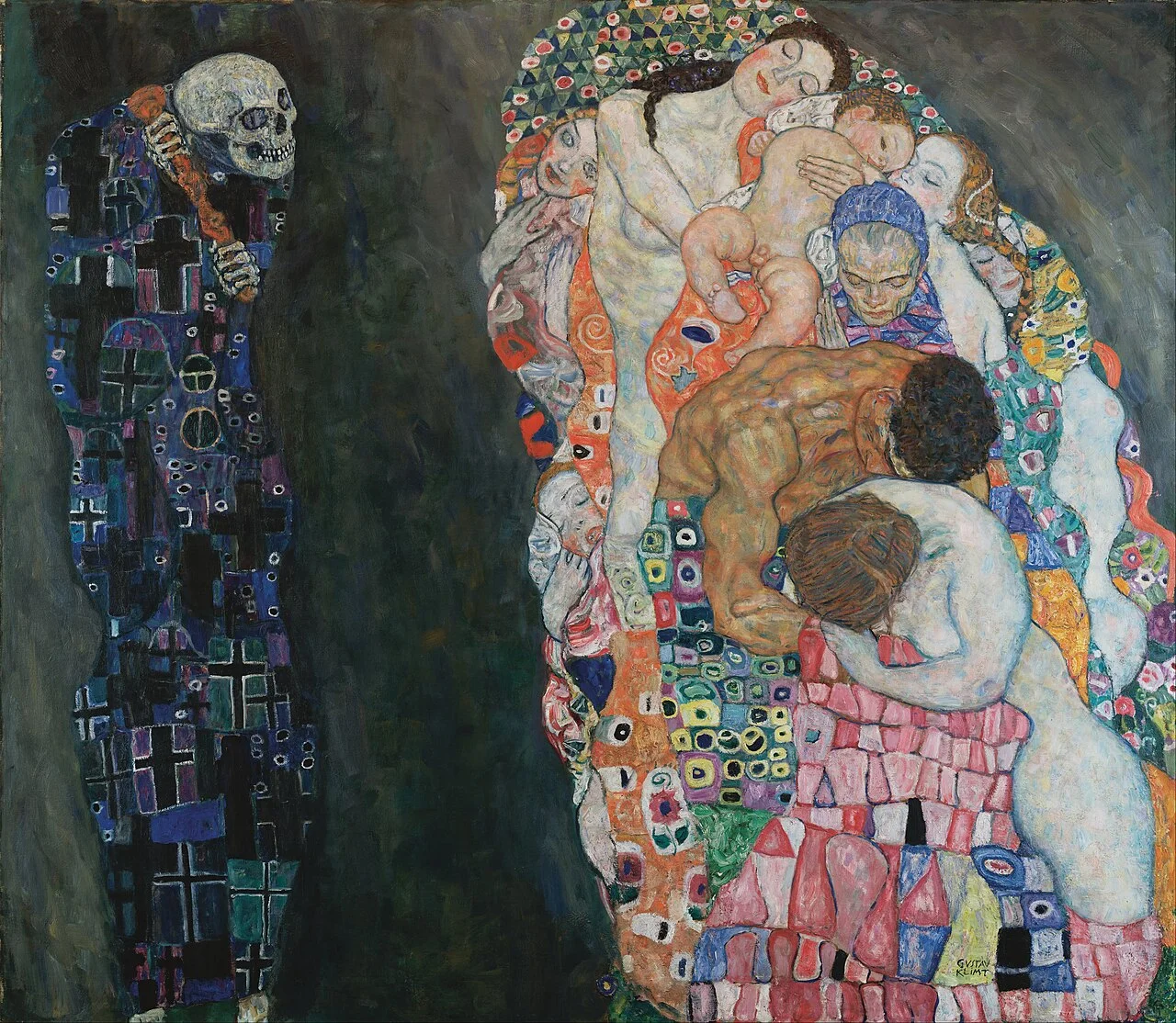
Gustav Klimt's Death and Life, begun around 1908 and revised to its final form in 1915, is one of the most searching allegories ever committed to canvas. The large oil — 178 by 198 centimetres — won first prize at the world exhibitions in Rome in 1911 while still in an earlier state, before Klimt returned to it and altered the background from gold to a sombre grey, deepening the painting's philosophical gravity. On the left stands the figure of Death: a skull-faced, dark-robed presence decorated with crosses, skulls, and bones, gazing with calm certainty toward the cluster of humanity on the right. There, a mass of intertwined human figures — men, women, children, the very old and the newborn — cling to one another in sleep or unconscious intimacy, oblivious to the spectre that regards them. The contrast between Death's solitary, knowing stillness and Life's teeming, heedless warmth forms the painting's central tension. Klimt's characteristic surface patterning is deployed here not in the gold-laden sensuousness of The Kiss but in a more subdued, melancholy register. The work is held at the Leopold Museum in Vienna alongside many of Klimt's major canvases, and stands as one of the most profound meditations on mortality in the Symbolist and Art Nouveau tradition.
Death and Life
Hours & rating from Google