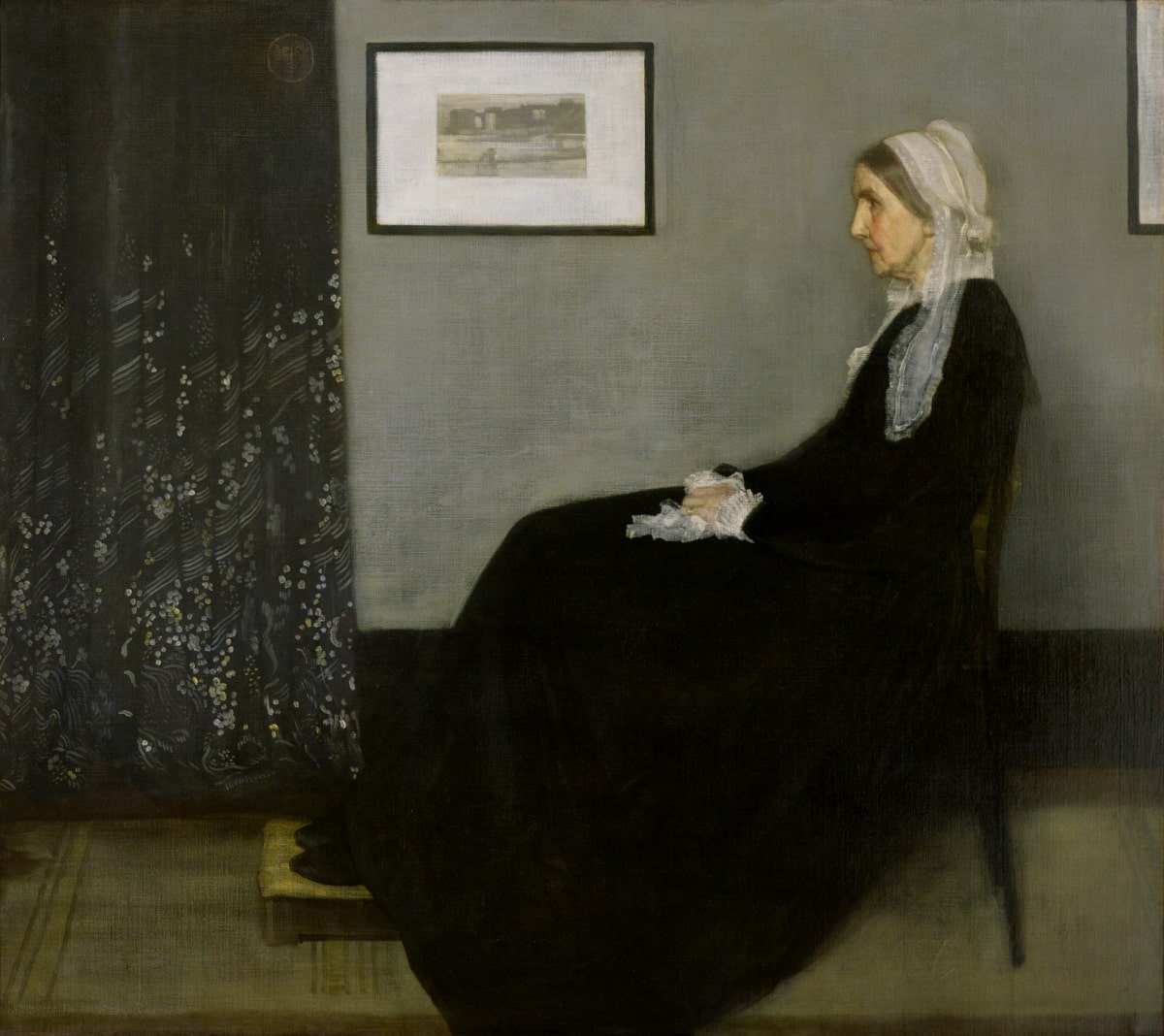
One of the most famous portraits in the world — where stillness becomes unforgettable.
Dates
Meet the artist
More details
- Original title
- Arrangement in Grey and Black No.1
- Movement
- Realism
- Genre
- Portrait
The story behind it
This work is known as “The Victorian Mona Lisa” and is considered one of the best-known American artworks created outside the United States, having become an icon due to its presence in popular culture. The entire composition underscores the humility of a decent and morally impeccable Victorian woman who gave her best to be a good mother and housewife. In the American context, the painting was hailed and embraced as an embodiment of morality and motherhood.
The painting is renowned for its composition and use of color. It exemplifies Whistler’s interest in “art for art’s sake,” emphasizing harmony and form over narrative content. At the time of its creation, the painting broke from traditional portraiture by focusing on a more subdued and contemplative mood. This approach influenced future generations of artists.
The painting has become an iconic image in American and Western culture, often referenced and parodied in various media. It represents a symbol of motherhood and familial devotion. A stamp was issued featuring a stylized image of Whistler’s mother, accompanied by the motto “In memory and In honor of the mothers of America.”
Look closer
Although popularly known as Whistler’s Mother, the artist insisted the painting was primarily about composition and tonal balance rather than sentimentality.
The title itself sounds almost musical, reflecting Whistler’s belief that painting should work like harmony in music.
In 1891, it became the first American artwork purchased by the French state and remains the most important American work residing outside the United States.
Worth the journey?
Yes — absolutely worth the trip. Few paintings prove so powerfully that simplicity can become iconic. In person, the silence and precision of the composition feel deeply modern. Beyond being a portrait of a mother, the painting has become a universal image of calm, endurance, dignity, and memory.
See it like an Artlover
First take in the geometry of the composition — the balance between the figure, wall, curtain, and framed picture. Then spend time observing the emotional restraint of the scene. The painting reveals itself slowly rather than dramatically.
Artlovers Tip:
Don’t search for obvious emotion in the face. The emotional power lives in the stillness, posture, and atmosphere. The longer you remain in front of it, the more radical Whistler’s quiet minimalism begins to feel.
Arrangement in Grey and Black No.1, Whistler's Mother
Hours & rating from Google