Pre-Raphaelite Brotherhood Also connected to Symbolism, Aestheticism, medieval revival, and Victorian romanticism.
Key Movements
Pre-Raphaelite, SymbolismA quick note
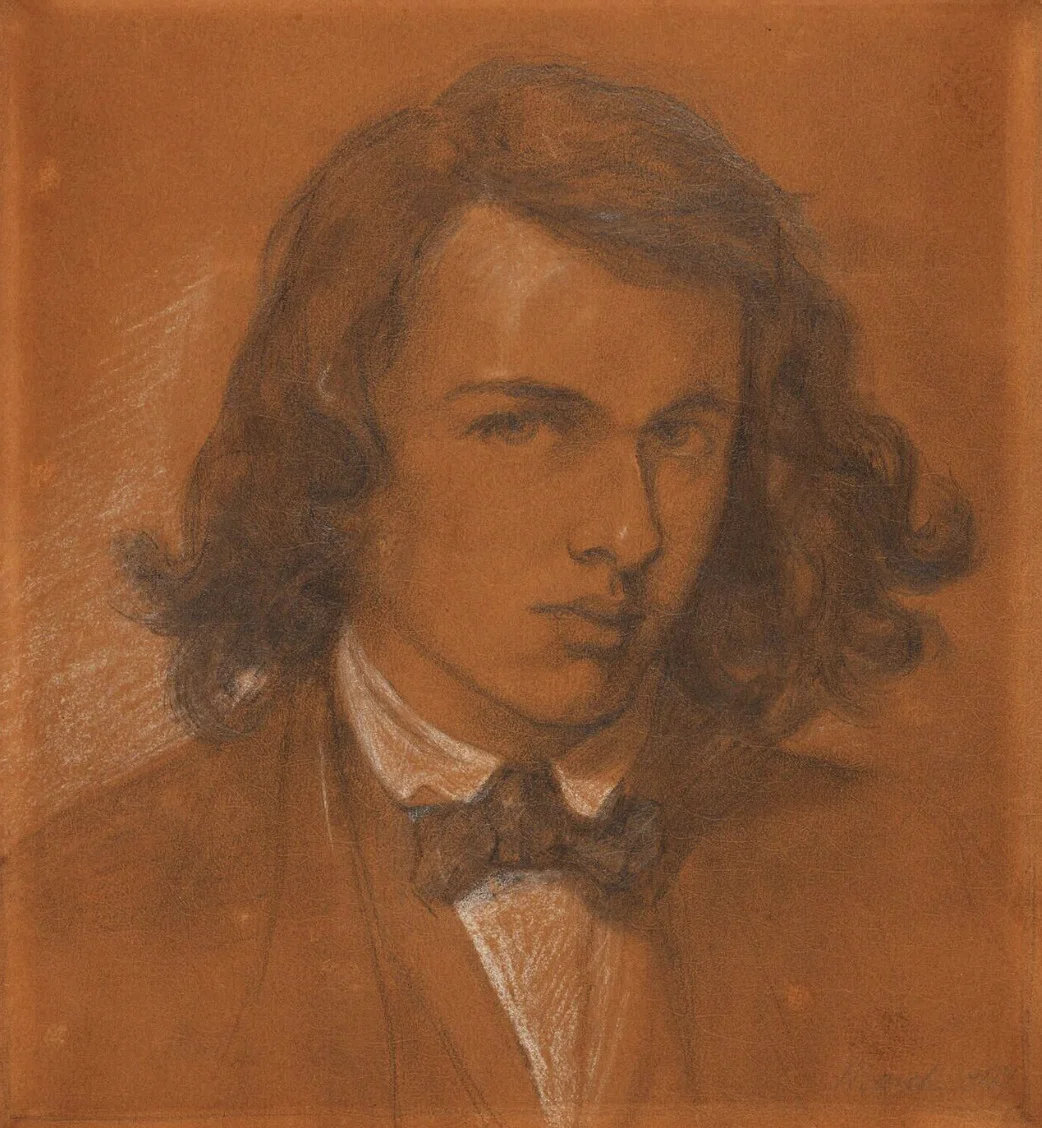
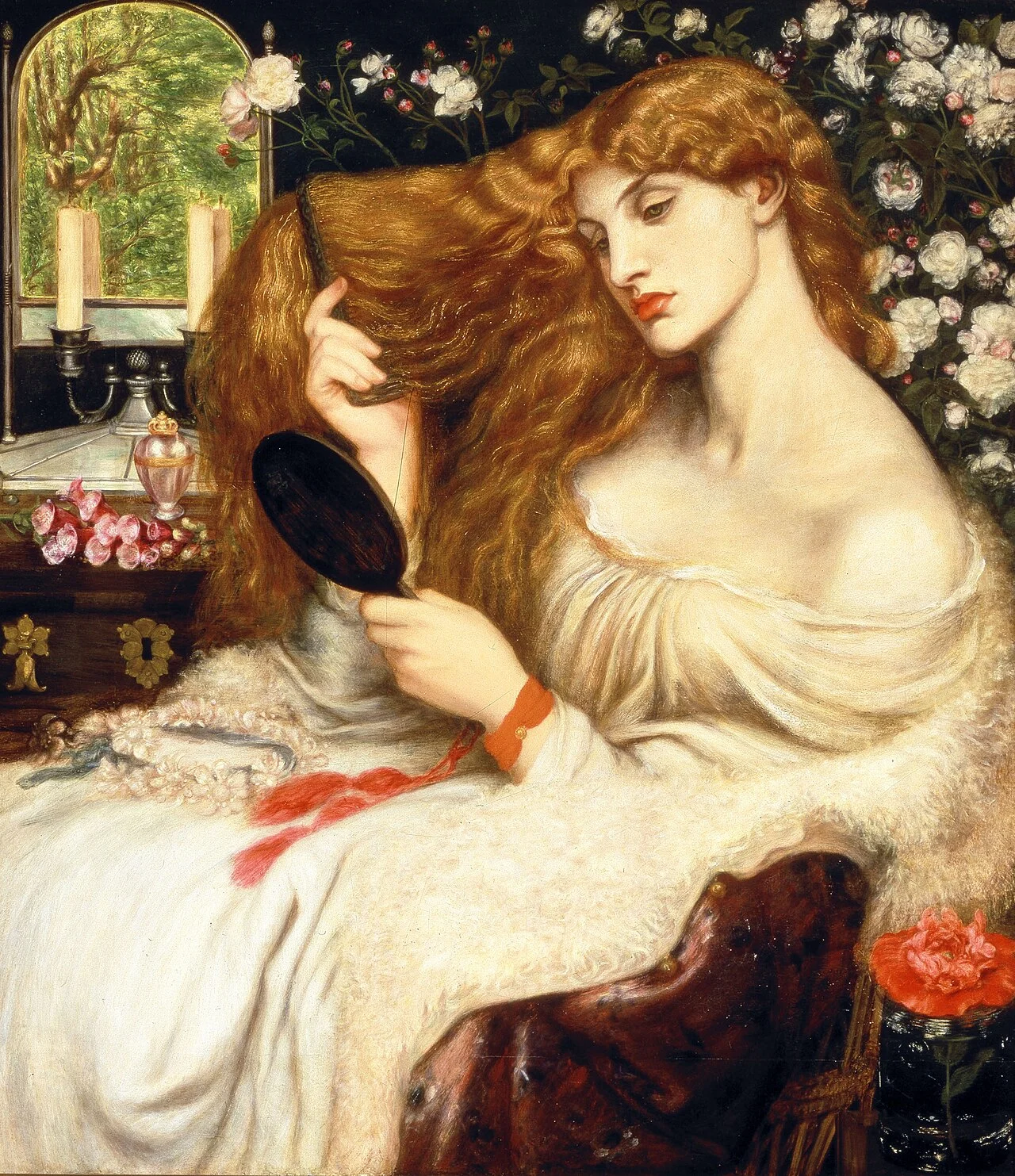
Dante Gabriel Rossetti was born on May 12, 1828, in London, to an Italian émigré father who was a Dante scholar and a mother of Italian-English descent. A child prodigy in both poetry and drawing, he studied at the Royal Academy Schools before co-founding the Pre-Raphaelite Brotherhood in 1848 alongside William Holman Hunt and John Everett Millais. The Brotherhood sought to revive the sincere, intensely detailed naturalism they believed had existed in Italian painting before Raphael, rejecting what they saw as the mechanical conventions of the Royal Academy.\n\nRossetti's early work — notably the watercolour The Wedding of Saint George and the Princess Sabra (1857) and his oil Ecce Ancilla Domini (1850) — showed a distinctive flatness and medieval dreaminess that set him apart from his Pre-Raphaelite colleagues. After the tragic death of his wife Elizabeth Siddal in 1862, his art underwent a profound transformation. He turned to large oil paintings of brooding, heavy-featured women — many modelled on Jane Morris, wife of William Morris — suffused with symbolic meaning, including Beata Beatrix, Proserpine, and Lady Lilith.\n\nRossetti was equally significant as a poet, publishing the collections The Early Italian Poets (1861) and Poems (1870). His sensuous, medievalist aesthetic deeply influenced the Aesthetic Movement and Symbolism, and his art and poetry together shaped the visual culture of the late Victorian era. He died on April 9, 1882, at Birchington-on-Sea, Kent.
Did you know?
Dante Gabriel Rossetti co-founded the Pre-Raphaelite Brotherhood and went on to paint his most haunting works — brooding, symbolism-laden portraits of women — that defined the romantic mysticism of Victorian art.
Why are they important?
Looking at Rossetti means entering a world of desire, poetry, myth, and melancholy. His paintings often show women with magnetic gazes, flowing hair, rich fabrics, musical instruments, flowers, and symbolic objects.They are not simple portraits. They feel like visions: part muse, part saint, part memory, part impossible love. Rossetti painted beauty as something emotional, dangerous, and almost spiritual.Seeing Rossetti in person is about the details: the red hair, the skin tones, the flowers, the decorative surfaces, the almost hypnotic silence.
Dante Gabriel Rossetti
- Born
- Died
- Nationality
- British