Medieval Art
Art as faith, symbol, and spiritual storytelling.
Artistas clave
- Giotto
- Cimabue
- Duccio
- Hildegard of Bingen
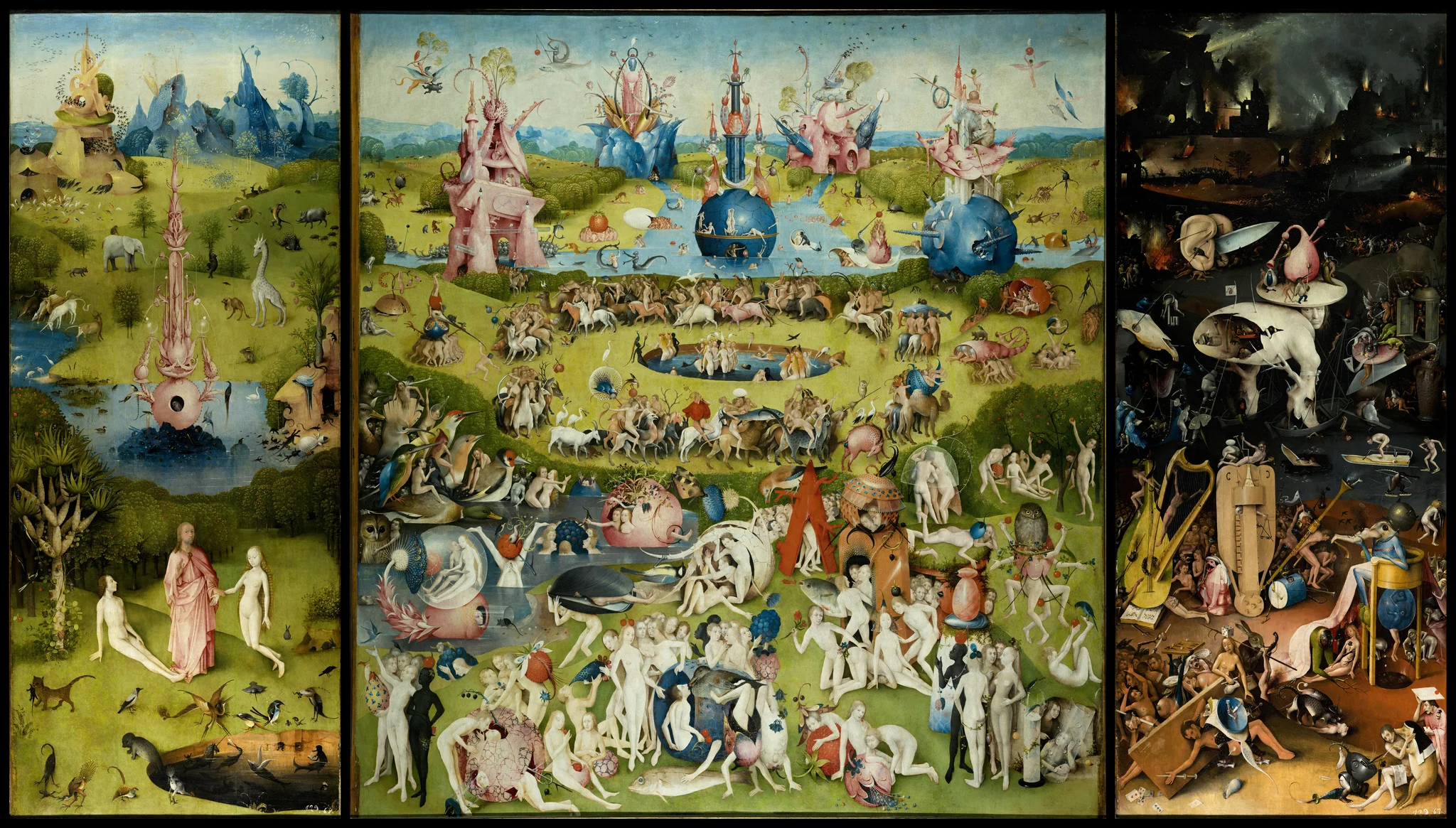
1430–1530
Pintura realizada en los Países Bajos borgoñones durante los siglos XV y comienzos del XVI, caracterizada por el realismo del óleo sobre tabla, el detalle minucioso y los temas devocionales o de vanitas — Jan van Eyck, Rogier van der Weyden, Hans Memling y Hieronymus Bosch entre sus principales figuras.
Cada época pinta el mundo a su manera. Recorre los movimientos que cambiaron la forma de mirar el arte — y descubre dónde ver hoy las obras que los definieron.
Línea de tiempo
Desliza horizontalmente para recorrer 15 siglos de arte.
En vertical
Los movimientos principales destacan; los secundarios fluyen alrededor.
Art as faith, symbol, and spiritual storytelling.
Golden icons and sacred images made to feel eternal.
Powerful church art: solid, symbolic, and deeply religious.
Art reaching upward — light, height, emotion, and divine drama.
The rebirth of perspective, nature, and the human figure.
The pursuit of perfect beauty, balance, and genius.
Elegant, strange, and exaggerated — Renaissance rules start to bend.
Drama, movement, light, and emotion turned up to full volume.
Playful, decorative, intimate — art for pleasure and elegance.
Ancient Greece and Rome reborn as order, reason, and heroic ideals.
Emotion over reason: nature, passion, freedom, and the sublime.
Art turns toward real life, ordinary people, and social truth.
Painting the fleeting moment — light, atmosphere, and modern life.
Beyond the impression: emotion, structure, color, and personal vision.
Dreams, myths, and inner worlds take over the canvas.
Nature becomes design: flowing lines, beauty, and total decoration.
Color breaks free — wild, emotional, and unapologetically bright.
Art as inner emotion: anxiety, intensity, and raw feeling.
Reality shattered and rebuilt from multiple points of view.
Speed, machines, energy, and the shock of the modern world.
Anti-art for a broken world — absurd, rebellious, and radical.
Pure abstraction: lines, grids, primary colors, and universal harmony.
Art meets design, architecture, function, and modern life.
Dreams, desire, and the unconscious made visible.
Art without direct representation — form, color, and feeling lead.
Art as political witness: workers, injustice, and collective struggle.
Gesture, scale, and emotion — painting as an act of freedom.
Mass culture becomes art: advertising, comics, celebrities, and brands.
Art becomes an event — playful, experimental, anti-market, and radically open.
Less is everything — simple forms, space, repetition, and presence.
The idea becomes the artwork.
Nature becomes the canvas — art moves outside the museum.
The artist's body, action, and time become the work.
The body becomes the canvas, the medium, and the battlefield.
"Poor" materials, radical ideas — art against consumer culture.
Painting imitates the camera with obsessive precision.
Art questions everything: originality, authorship, taste, and power.
Únete a nuestra comunidad de amantes del arte y descubre exposiciones, artistas y obras maestras adaptadas a tus gustos. Recibe recomendaciones personalizadas y no te pierdas ninguna exposición imprescindible.
Únete