

At a glance
Rupture serves as a lens to examine the intersections of migration, colonial legacies, and the shifting climate across Toronto’s urban and natural landscapes.
Meet the artist
Why go
With sixteen new commissions and thirty artists, the event transforms the city into a living map of global connections, linking local waterways to histories spanning five continents.
You'll see
New commissions · Indigenous textiles · Waterfront installations · Multimedia works · Global diasporic art
Pace of visit
The geographical spread across ten different sites requires planning a route between the downtown core and the waterfront.
Don't miss
Rebecca Belmore’s site-specific installation, which addresses Indigenous land rights and the environment through powerful, elemental materials.

Artlovers Tip
Begin at the Art Museum at the University of Toronto to pick up context before using the digital map to navigate toward the larger installations at the waterfront and Auto BLDG.
Inside the exhibition
Things Fall Apart is the 2026 edition of the Toronto Biennial of Art, a city-wide program spread across Toronto, Canada. The event centers on the concept of rupture, using it as a tool to examine how climate change, colonial histories, and migration patterns reshape our unstable present. Admission is free to all biennial sites and programs.
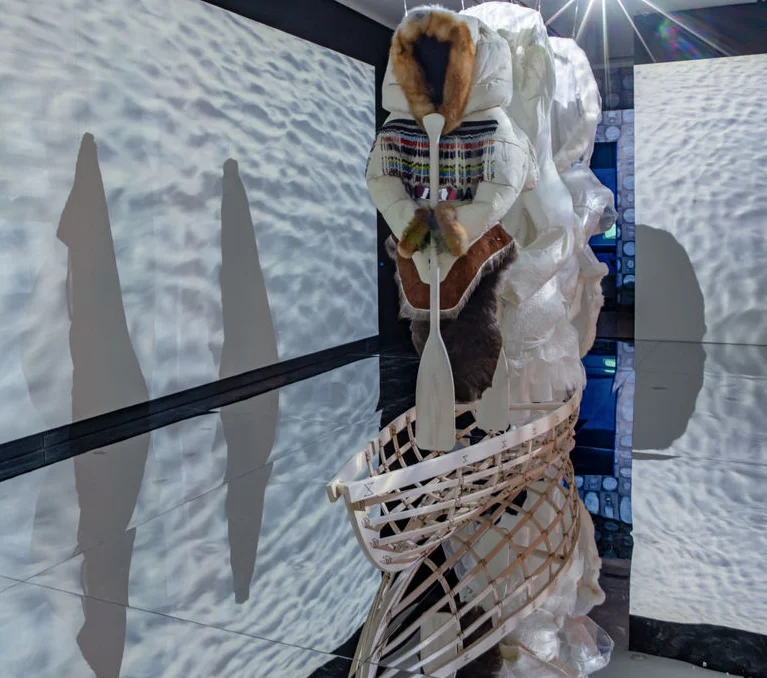
The program features works by thirty international artists, including Rebecca Belmore, Solange Pessoa, and Raphaël Barontini. Visitors will encounter sixteen new commissions across ten different sites, ranging from large-scale installations at the Art Museum at the University of Toronto to public interventions along the city's waterfront and industrial spaces. The media spans from immersive video and textiles to outdoor sculpture.
By tracing the connections between global waterways and local histories, the biennial offers a critical framework for understanding Toronto's place within a five-continent network. The mix of Indigenous perspectives, such as those of Taqralik Partridge, and diasporic narratives provides a layered, contemporary look at how societies rebuild after structural shifts. It is an essential framework for experiencing the city's contemporary art scene during the autumn season.
Worth travelling for?
A sprawling, ambitious circuit for travelers who want to see how contemporary art engages with environmental justice and the legacies of empire through large-scale commissions.
Experience as an Artlover
Admission to all biennial venues and public programs is free; however, some indoor sites may have specific capacity limits. Check the official digital guide for daily performance schedules and seasonal opening hours for outdoor installations along the waterfront.
Things Fall Apart — Toronto Biennial of Art 2026
Admission
Artlovers relevance
On view at
Harbourfront Centre
Toronto, Canada