At a glance
Thousands of years before modern runways, Roman citizens used draped fabric and scented oils to signal their status and political leanings in a highly visual society.
Why go
This expansive archaeological study shifts the focus from static marble to the lived experience of the Roman world, treating clothing as a complex social code rather than mere decoration.
You'll see
Coloured dress reconstructions · Ancient sculpture · Intricate jewellery · Perfume culture · Roman hairstyles
Pace of visit
Expect a high-density display that requires significant reading and attention to detail across several large galleries.
Don't miss
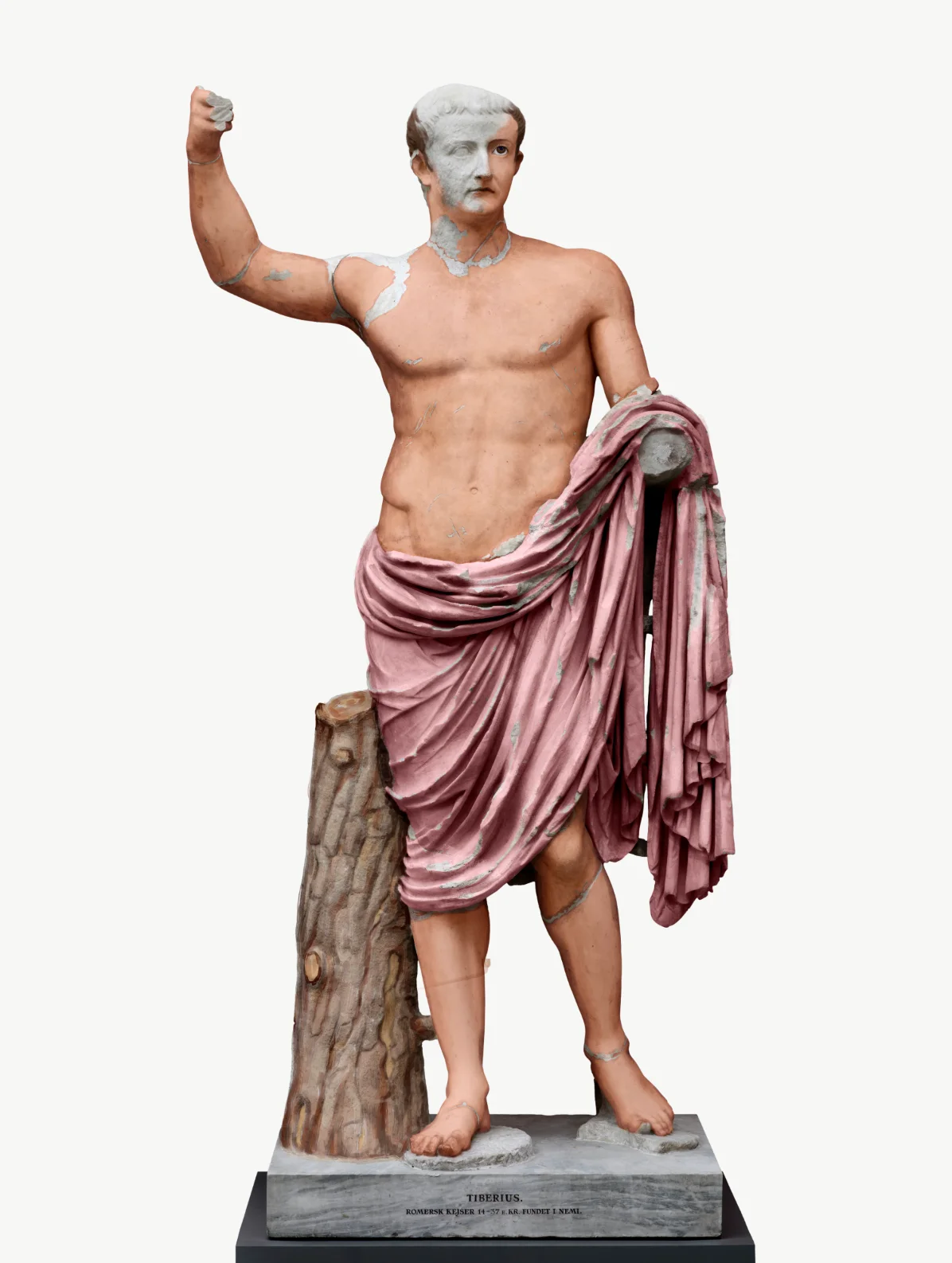
The archaeological evidence proving that classical sculptures were originally painted, dismantling the myth of a monochrome ancient world.

Artlovers Tip
Arrive early in the day to navigate the dense information comfortably. This is a rigorous archaeological study rather than a purely aesthetic display, so allow plenty of time for reading.
Inside the exhibition
The Power of Fashion in the Roman Empire — Ancient dress and identity at Glyptoteket in Copenhagen, Denmark, re-evaluates the visual language of antiquity. The exhibition examines how the people of Rome used textiles, jewellery, and grooming to communicate status, navigate social hierarchies, and express cultural belonging.
Occupying more than 1,000 square metres, the display pairs classical sculpture with vivid, coloured reconstructions of ancient garments. The presentation covers the specific roles of footwear, complex hairstyles, and even scent, drawing on archaeological evidence to recreate a multi-sensory environment.
This project represents an ambitious interdisciplinary shift for the museum, moving beyond the usual focus on artistic form to explore the social function of dress. By highlighting the original use of vibrant colour and perfume, it challenges the popular perception of a monochromatic, white-marble Roman world.
Worth travelling for?
An ambitious and scholarly deep dive for those interested in identity and material history, offering much more than a typical fashion retrospective.
The Power of Fashion in the Roman Empire — Ancient dress and identity
Admission
Artlovers relevance
On view at
Hours & rating from Google