At a glance
Explore the intricate fiber works of a forgotten Andalusian pioneer as her weaving and pedagogical legacy finally returns to the spotlight after four decades of silence.
Meet the artist
Why go
This retrospective gathers rare family donations and loans to re-evaluate Navarro’s role in modern Spanish art, coinciding with a global revival of interest in textile-based practices.
You'll see
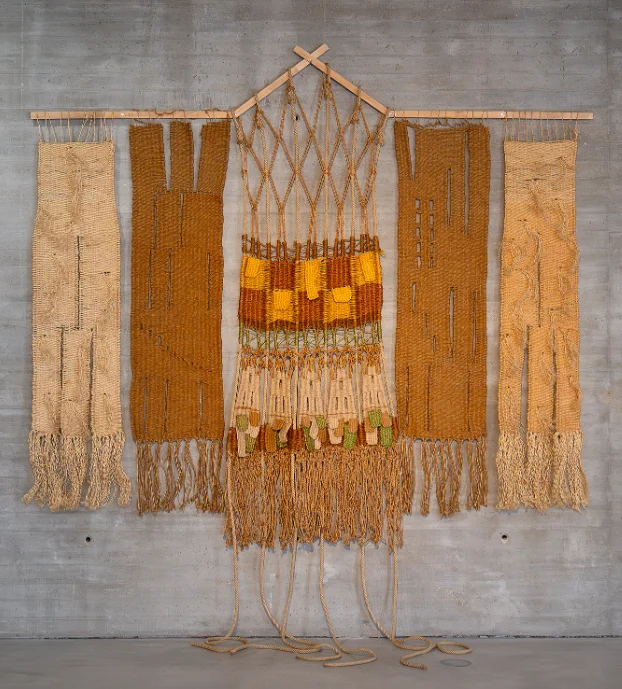
Woven structures · Thread-based works · Archival documentation · Pedagogical materials
Pace of visit
The display balances physical textile objects with substantial archival research, requiring a steady pace to absorb the historical context and the artist's teaching methods.
Don't miss
The archival section detailing her pedagogical practice offers a rare look at how she influenced the next generation of Spanish weavers.

Artlovers Tip
Look at the woven pieces through the lens of social history; the works reflect both artistic bravery and the historical reality of women’s textile labour in Spain.
Inside the exhibition
Tejer el vacío presents the work of Chonín Navarro at the Centro Andaluz de Arte Contemporáneo in Sevilla, Spain. This retrospective brings the Andalusian artist back into the public eye, highlighting her significant but long-neglected contributions to Spanish textile art and modernism.
Visitors encounter a range of woven structures and thread-based works alongside extensive archival materials documenting her career. The selection covers her creative output and her influential role as a teacher, drawing from private family donations and institutional loans to reconstruct a creative life that spanned several decades.
By positioning Navarro’s experimentation within the broader social history of women’s labour, the exhibition offers more than just a formal study of fibre. It marks a critical moment of institutional recovery, connecting Navarro’s mid-century practice with the contemporary fascination for tactile, handmade mediums.
Worth travelling for?
A rewarding and culturally significant recovery for anyone interested in Andalusian modernism, the history of craft, and the stories of overlooked women artists.
Tejer el vacío
Admission
Artlovers relevance
On view at
Hours & rating from Google