At a glance
Large, rhythmic canvases and bold color experiments define a decade of creative liberation for Lee Krasner in her first ever solo exhibition in France.
Meet the artist
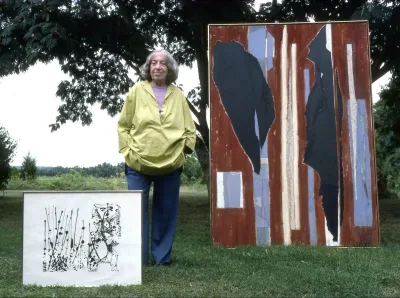
Why go
This collaborative presentation offers a rare look at Krasner's most assertive decade, where she moved beyond monochromatic introspection into the monumental scale and vibrant, gestural confidence that established her as a primary force in Abstract Expressionism.
You'll see
Monumental abstract paintings · Gestural works on paper · The Umber Series · The Primary Series · Calligraphic color experiments
Pace of visit
The exhibition occupies the gallery’s rue de Ponthieu space, where the large-scale canvases require space for viewers to step back and appreciate their physical rhythm.
Don't miss
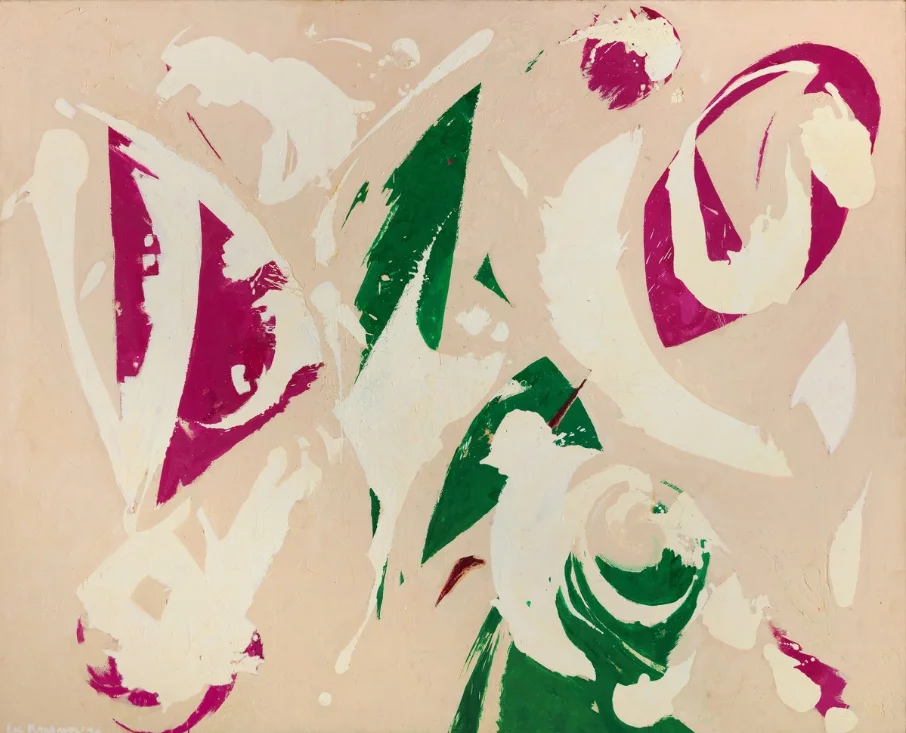
The majestic oil painting Comet (1966–70), a late-decade work that exemplifies Krasner's sophisticated integration of sweeping arcs and nodules of paint.

Artlovers Tip
Visit in the morning to see the works under the gallery's natural light, which best reveals the textural layering and subtle sprays of paint in the later 1960s canvases.
Inside the exhibition
Lee Krasner: Works from the 1960s at Gagosian in Paris, France, focuses on a pivotal decade for the American artist. Marking her first solo exhibition in France, the show brings together significant paintings and works on paper produced in the years following the death of Jackson Pollock. Visitors will encounter a body of work that signals Krasner’s transition from monochromatic, insomnia-driven compositions to a period of vibrant color and monumental physical scale.
The selection highlights the evolution of Krasner’s visual language, from the earth-toned, psychoanalytically charged Umber paintings to the explosive brilliance of the Primary Series. These works demonstrate her unique backhand gesture—a rhythmic, curvilinear sweep across the canvas—and her engagement with both Jungian psychology and French modernism. The show includes major loans that illustrate her mastery of all-over composition and her ability to merge calligraphic marks with organic, floral-inspired forms.
Seeing these works at the rue de Ponthieu gallery provides a focused look at Krasner’s technical versatility and her definitive step out of her husband's shadow. By concentrating specifically on the 1960s, the exhibition contextualizes her role as a courageous innovator who constantly reinvented her practice. It is a significant opportunity to observe these influential postwar abstractions in the city that Krasner herself visited in 1956, a trip that deeply informed her lifelong dialogue with European painting.
Worth travelling for?
A concentrated and physically powerful presentation that finally grants Krasner her own stage in Paris, ideal for those who value the energetic evolution of postwar American abstraction.
Experience as an Artlover
The gallery is open Tuesday through Saturday from 10:30am to 6:30pm with free admission. No prior booking is required, though the space can become busy during the week of Art Basel Paris in mid-October.