At a glance
The sculptor behind Central Park’s iconic Angel of the Waters returns to the spotlight in a survey exploring her life in Rome and her place in American art.
Meet the artist
Why go
This first museum retrospective brings together rare marble works and archival documents to reclaim the legacy of a pioneering woman who broke 19th-century gender barriers in international sculpture.
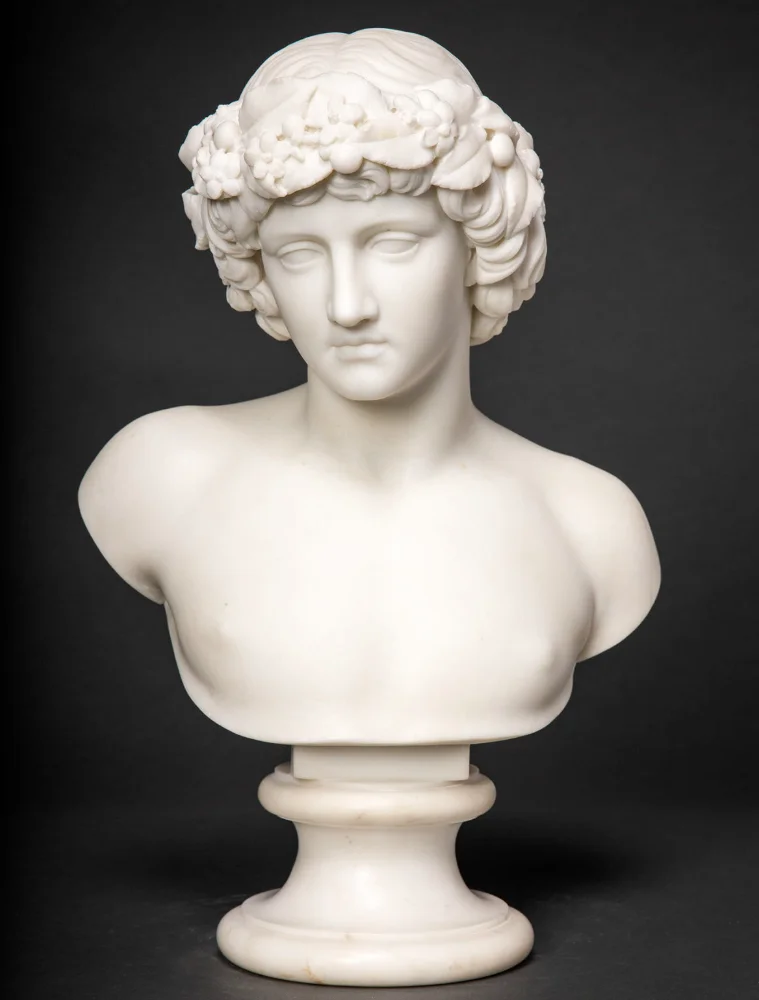
Stebbins became the first woman to receive a public sculpture commission from the City of New York. The exhibition reunites 13 marble sculptures from collections across the United States and Europe, accompanied by paintings, photographs, archival material and rare publications.
It also examines Stebbins’s life in Rome with her wife, Shakespearean actor Charlotte Cushman, revealing how her art challenged conventional assumptions about gender, sexuality, professional ambition and women’s independence.
You'll see
Neoclassical marbles · Industrial allegories · Portrait of Charlotte Cushman · Rare photographs · Personal documents
Pace of visit
The show balances large-scale sculpture with a high volume of archival material, inviting a steady, observant pace to absorb the historical context.
Don't miss
Look for the industrial worker figures, where Stebbins applies noble Neoclassical aesthetics to the gritty realities of 19th-century labor.

Artlovers Tip
Take a moment to appreciate how the Driehaus Museum’s ornate Gilded Age architecture serves as a natural backdrop, grounding Stebbins’s marbles in their original historical atmosphere.
Inside the exhibition
Emma Stebbins: Carving Out History at the Richard H. Driehaus Museum in Chicago, USA, marks the first comprehensive museum look at a sculptor long overshadowed by her most famous public commission. While millions know her Bethesda Fountain in New York, this exhibition shifts the focus back to the artist herself, tracing her trajectory from mid-19th-century America to the creative expatriate circles of Rome.
The galleries display thirteen significant marble sculptures alongside bronzes, paintings, and a wealth of archival material. Central to the narrative is Stebbins's relationship with the actress Charlotte Cushman, documented here through a portrait bust and personal papers that offer a window into LGBTQ+ history during the Victorian era. The selection also features her unusual industrial allegories, which depart from traditional mythological themes to honor modern labor.
What sets this show apart is the way it reconstructs a career that was nearly lost to history. By presenting these works within a specialized Gilded Age setting, the museum provides a physical sense of the world Stebbins inhabited. It is a necessary re-evaluation of a woman who navigated a male-dominated field to become a key figure in American Neoclassicism.
Worth travelling for?
A rewarding visit for those interested in the intersection of American sculpture, hidden LGBTQ+ histories, and the rediscovery of pioneering female artists.
Emma Stebbins: Carving Out History
Artlovers relevance
On view at
Hours & rating from Google