At a glance
Six Palestinian artists who built an independent community in Gaza demonstrate how collective creativity can sustain cultural identity and human relationships under extraordinary circumstances.
Meet the artist
Why go
More than 60 works reveal how an independent artistic community in Gaza maintained its practice through shared resources, offering international visitors a rare encounter with contemporary Palestinian art and the history of its survival.
You'll see
More than 60 artworks · Paintings and drawings · Mixed-media compositions · Archival documents · Annotated historical timeline
Pace of visit
Allow time to read the extensive archival timeline alongside the artworks.
Don't miss
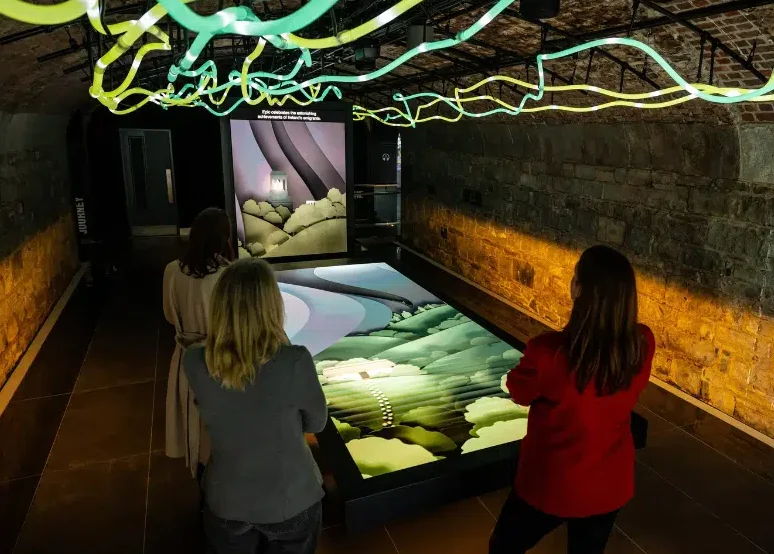
The extensive annotated timeline tracing Eltiqa's history and Palestinian cultural development from 1948 to 2026.

Artlovers Tip
Begin with the annotated timeline in Gallery 3 to understand how the collective operated before looking closely at the individual paintings and drawings.
Inside the exhibition
Presented at the Irish Museum of Modern Art in Dublin, Eltiqa: How to Work Together? examines the history and artistic output of a pioneering Gaza-based collective founded in 2000. Curated by The Question of Funding, the presentation brings together more than 60 works that challenge conventional ideas of the artist as an isolated individual by centering mutual support and shared infrastructure.
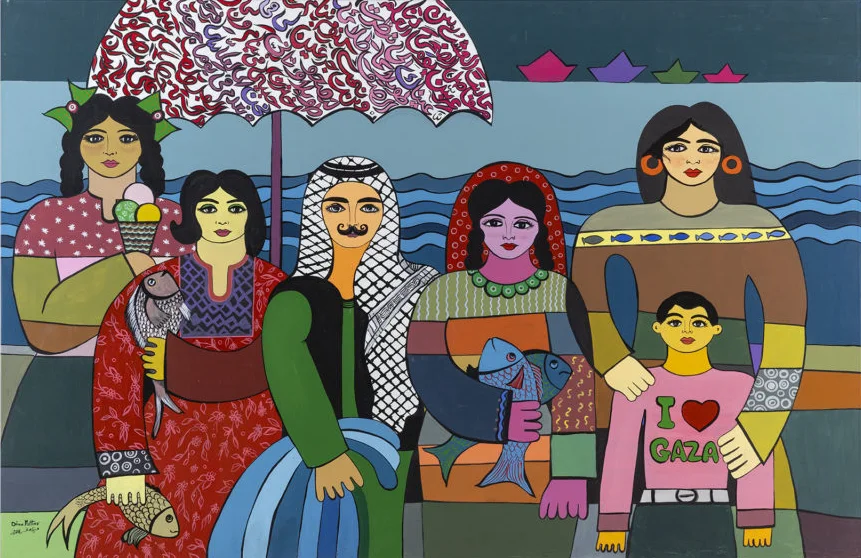
The exhibition features paintings, drawings, and mixed-media creations by six core members: Mohamed Abusal, Abdel Raouf Al-Ajouri, Mohammed Al-Hawajri, Raed Issa, Dina Matar, and Sohail Salem. Their visual approaches range from expressive figurative compositions and vibrant depictions of domestic life to conceptual explorations of mobility and the psychological weight of displacement. Alongside these pieces, an extensive annotated timeline maps the collective's evolution from 1948 to 2026 against the wider political and social realities of the region.
Beyond aesthetic presentation, the project highlights the remarkable networks of friendship and international solidarity that allowed these artworks to survive the destruction of Gaza's cultural infrastructure. By examining both the objects and the collaborative framework behind them, the presentation offers a compelling look at how communities maintain cultural continuity through political violence.
Worth travelling for?
A meaningful and distinctive stop for visitors interested in socially engaged art, contemporary Palestinian culture, and the vital role of collective infrastructure in preserving heritage.
Experience as an Artlover
The exhibition is located in Gallery 3 of the Royal Hospital Kilmainham site and contains material that some visitors may find emotionally challenging.
Eltiqa: How to Work Together?
Admission
Artlovers relevance
On view at
Hours & rating from Google